Rleey | Tungsten Carbide Strips vs Other Hard Alloy Raw Materials
- Share
- publisher
- Bree
- Issue Time
- Oct 8,2026
Summary
Compare tungsten carbide rectangular strips with other hard alloy raw materials, check wear resistance and total cost for industrial wear blank selection.
Full Article Structure
- 1. Introduction: Carbide Grade Selection Directly Decides Tool Lifespan
- 2. Core Machining Factors Affecting Carbide Grade Choice
- 3. Carbide Grade Matching by Workpiece Material
- 4. How Cutting Speed & Intermittent Cuts Change Grade Requirements
- 5. Carbide Grade Matching Reference Table
- 6. FAQ for Carbide Grade & Machining Condition Matching
- 7. Summary & VUILI Grade Recommendation Service
1. Introduction: Material Comparison for Wear Blanks
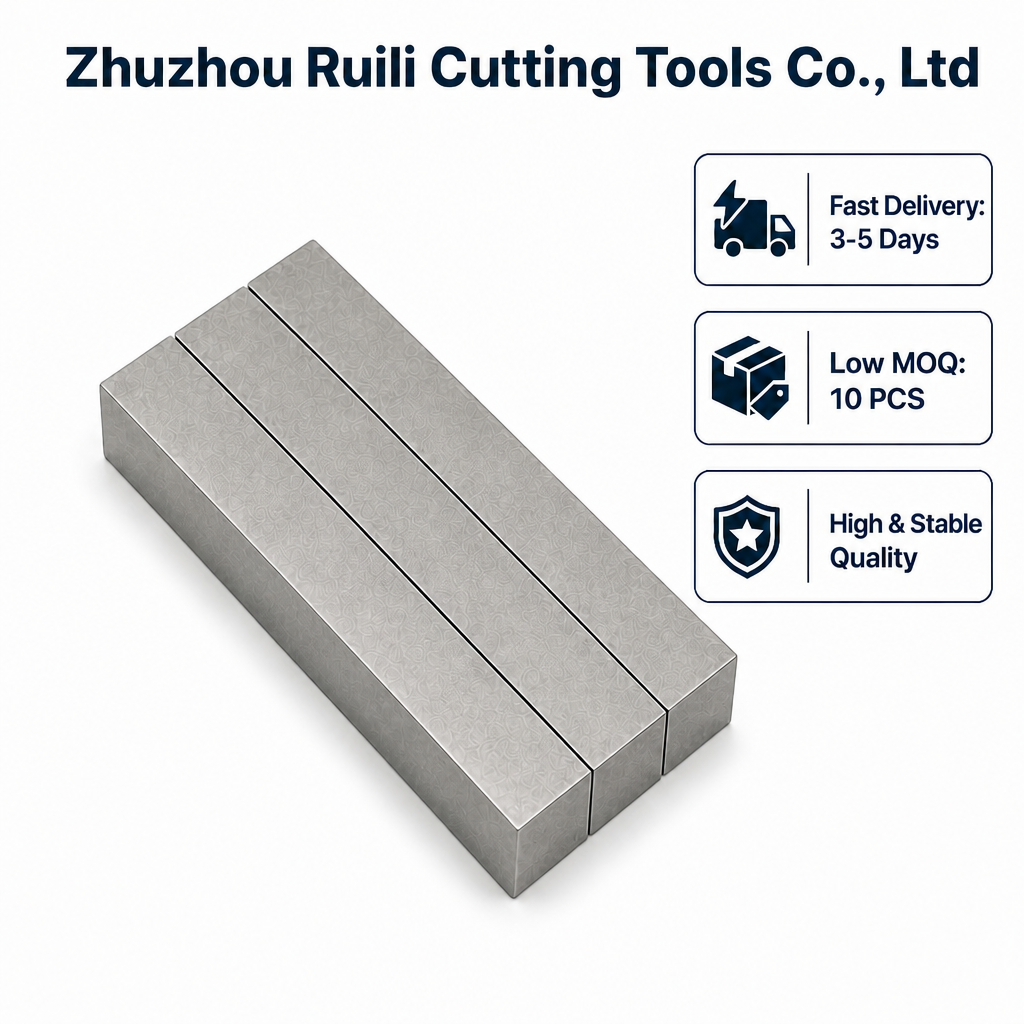
Manufacturers can choose tool steel, high manganese steel or tungsten carbide for wear component blanks. Each material has different trade-offs between wear resistance, impact tolerance and total cost. This guide compares tungsten carbide rectangular strips against other common hard alloy raw materials.
2. Performance Comparison Table
| Material | Wear Resistance | Impact Resistance | Total Cost of Ownership | Typical Use |
|---|---|---|---|---|
| Tungsten Carbide Strips | Excellent | Medium | Low (long service life) | Wear liner, cutting blade blank |
| Alloy Tool Steel | Moderate | High | High (frequent replacement) | Light wear, heavy impact parts |
| High Manganese Steel | Moderate | Very High | Medium | Mining heavy impact components |
3. Advantages of Tungsten Carbide Rectangular Strips
-
Outstanding abrasion resistance against sand, wood fiber and metal chips
High compressive strength and stable dimension under friction heat
Customizable dimensions and pre-processing
Long service life reduces machine downtime and replacement labor cost
4. Limitations of Other Hard Alloy Materials
Alloy tool steel wears quickly under abrasive media. High manganese steel will deform under continuous friction. These materials have lower upfront price, but frequent replacement leads to higher long-term operational cost. Carbide strips are ideal if your main failure mode is surface abrasion.
5. FAQ for Material Selection
Q1: When should I choose carbide instead of steel?
Choose carbide when parts suffer continuous abrasive wear and impact load is not extreme.
Q2: Is tungsten carbide always more expensive?
Unit price is higher, but total cost over the whole lifecycle is often lower.
Q3: Can you provide test samples of different materials?
We offer carbide strip samples for side-by-side wear comparison.
6. Summary & Material Selection Guidance
Tungsten carbide rectangular strips outperform many hard alloy raw materials in abrasive wear conditions. If your machine parts fail mainly from abrasion, carbide strips are a cost-effective upgrade. Send your working condition for our material recommendation.
CTA Contact Zone
Material Comparison Consultation
📧 Contact Us → /contact-us.htm
Share your wear problem, we compare carbide vs steel solution for your project.
Carbide Strip Sample Inquiry
📧 Contact Us → /contact-us.htm
Request carbide strip samples for wear performance test.
Disclaimer
Material comparison data is for reference only. Actual service life depends on working medium, impact and assembly method. Sample testing is recommended before bulk switch of material.