Rleey | Solid Tungsten Carbide Strips Selection for Wood Cutting & Slitting
- Share
- publisher
- Jane
- Issue Time
- Oct 25,2026
Summary
Solid tungsten carbide strips are widely used as wear cutting edges for woodworking machinery, log slitting, panel cutting and lumber processing. This article explains how to select the correct carbide grade and strip dimensions for wood cutting and slitting applications. It compares carbide grades for clean wood, abrasive contaminated wood and interrupted cutting conditions, covering strip width, thickness, length, edge preparation, common failure modes such as edge chipping and abrasive wear.
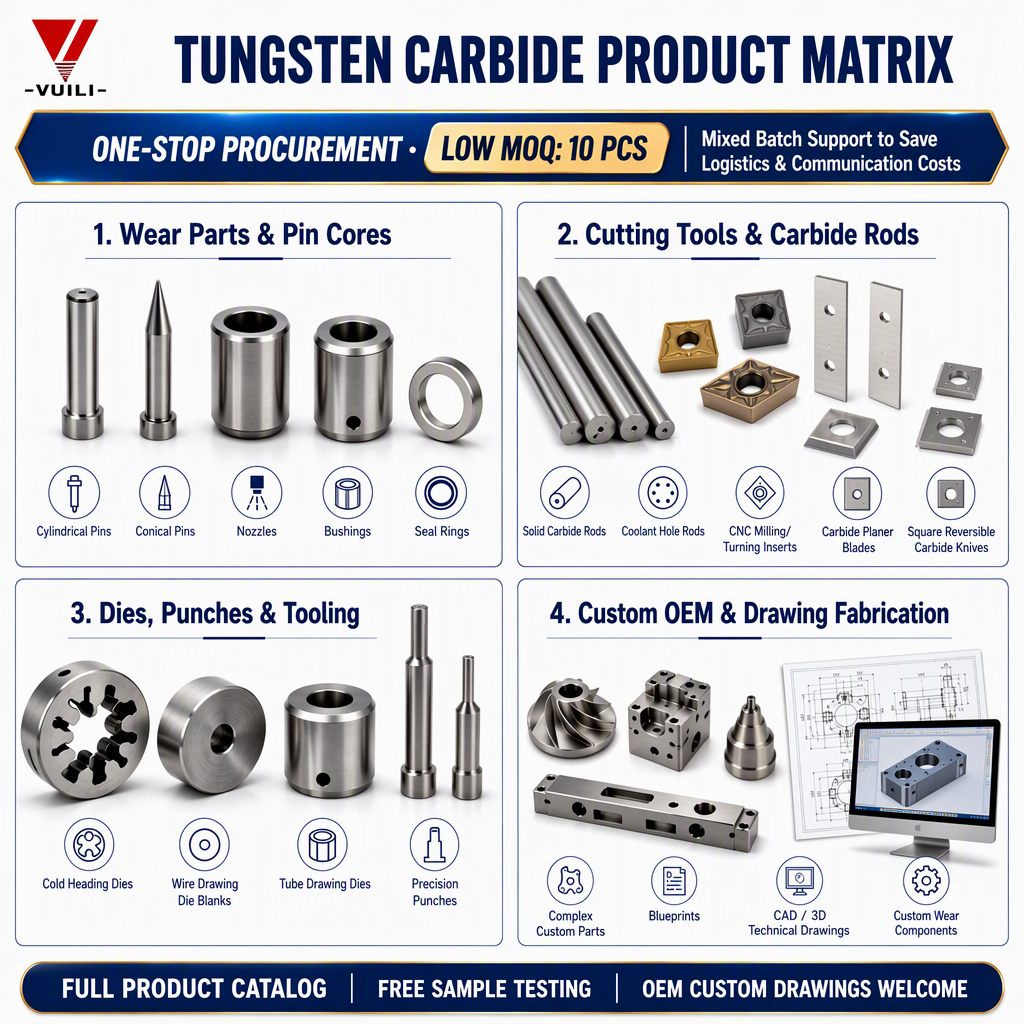
Solid Carbide Strips: How to Pick Grade & Size for Wood Cutting & Slitting Applications
Table of Contents
- 1. Introduction: Solid Carbide Strips in Woodworking
- 2. Evaluate Your Wood Cutting & Slitting Conditions
- 3. Tungsten Carbide Grade Selection Guide
- 4. How to Select Strip Thickness, Width & Length
- 5. Edge Preparation & Cutting Geometry
- 6. Common Strip Failures & Root Causes
- 7. Installation Tips for Carbide Strips
- 8. FAQ
Solid tungsten carbide strips are the primary cutting edge wear parts for woodworking machinery, widely used for log slitting, lumber cutting, panel sizing, particle board and plywood slitting. Wood materials often contain sand, gravel, knots and hard resin, which rapidly wear high-speed steel blades. Carbide strips deliver excellent wear resistance and edge retention, greatly reducing downtime for tool replacement. However, wrong carbide grade or improper strip dimensions can lead to edge chipping, fast wear and poor cutting quality. This guide helps you select the right solid carbide strips for your wood cutting and slitting processes. Before selecting carbide strips, analyze your working environment to narrow down material and size options: Clean wood cutting prioritizes edge retention, while wood with sand contamination needs higher wear-resistant carbide grades. Knotty wood requires better impact toughness to resist edge chipping. Higher cobalt content improves toughness to handle impact from wood knots, but reduces wear resistance. Fine grain carbide can maintain a sharper cutting edge, but edges chip easily when hitting hard knots or embedded stones. Medium grain carbide is the most popular all-round option for most wood slitting lines. Strip dimensions must match your tool holder and cutting depth requirements. The three key parameters are thickness, width and length. Tip: Always reserve enough regrind width. If you only leave a small margin, the strip will become unusable after one or two sharpening cycles. Edge geometry directly affects cutting quality and service life. The main parameters include top rake angle, clearance angle and edge honing. For abrasive wood panels, a lightly honed edge is strongly recommended to avoid premature micro-chipping. A: Yes. We produce solid carbide strips with custom thickness, width, length and edge profiles according to your requirements. A: Choose medium or fine grain carbide for wear resistance, with edge honing. If knots and stones occur frequently, switch to coarse grain 10% Co grade for better chipping resistance. A: Yes, sample strips can be provided for field testing. After validation, we can arrange mass production with full COA documents.1. Introduction: Solid Carbide Strips in Woodworking
2. Evaluate Your Wood Cutting & Slitting Conditions
3. Tungsten Carbide Grade Selection Guide
Carbide Grade Type
Cobalt Content
Performance Features
Recommended Application
Fine Grain
6% Co
High wear resistance, sharp edge holding, lower toughness
Clean hardwood, MDF, plywood slitting, low knot frequency
Medium Grain
8% Co
Balanced wear resistance and impact toughness, universal grade
General lumber cutting, occasional knots, most wood slitting machines
Coarse Grain
10% Co
High toughness, strong anti-chipping capacity
Heavy knotty logs, wood with sand/stone impurities, interrupted cutting
4. How to Select Strip Thickness, Width & Length
5. Edge Preparation & Cutting Geometry
6. Common Strip Failures & Root Causes
7. Installation Tips for Carbide Strips
8. FAQ
Q1: Can you supply carbide strips cut into custom lengths and sizes?
Q2: What is the best carbide strip for cutting sand-contaminated logs?
Q3: Can we get sample carbide strips for wood cutting test?