Operating Conditions Solutions
All
Technical Material Guides
Procurement and Selection Tips
Case Studies and Factory Capability
Operating Conditions Solutions
Tungsten Market & Pricing Insights
Custom Machining & OEM FAQs

Operating Conditions Solutions

Rleey | Custom Tungsten Carbide for Variable Temperature Working Environments

Variable temperature environments cause thermal shock and crack failure on carbide parts. Explore custom tungsten carbide solutions for high and fluctuating temperature industrial working conditions.

Oct 10,2026
Rleey | Custom Tungsten Carbide for Variable Temperature Working Environments

Rleey | How Carbide Material Choices Reduce Downtime in Severe Service

Wrong material selection causes frequent part failure and expensive downtime. Learn how proper tungsten carbide grade selection cuts equipment downtime and maintenance cost in severe service environments.

Oct 10,2026

Rleey | How Carbide Material Choices Reduce Downtime in Severe Service

Rleey | Key Design Tips for Carbide Components Under Cyclic Loads

Cyclic loads cause fatigue failure on carbide components. Learn critical carbide design tips including material selection, stress relief geometry and surface treatment to extend service life.

Oct 10,2026

Rleey | Key Design Tips for Carbide Components Under Cyclic Loads

Rleey | Match Carbide Performance to Dynamic Industrial Working Conditions

Dynamic industrial working conditions require flexible carbide performance. Find out how Rleey tunes tungsten carbide material and geometry to adapt to changing loads and operating environments.

Oct 10,2026

Rleey | Match Carbide Performance to Dynamic Industrial Working Conditions

Rleey | Mitigate Impact and Abrasion with Tungsten Carbide Wear Parts

Tungsten carbide wear parts deliver reliable protection against heavy impact and abrasion. Learn how cemented carbide components extend service life for mining, crushing and construction working conditions.

Oct 10,2026
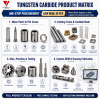
Rleey | Mitigate Impact and Abrasion with Tungsten Carbide Wear Parts

Matching Carbide Round Bar Properties to Your Specific Operating Conditions

Standard carbide round bars with fixed properties cannot adapt to all industrial machining scenarios. Each customer has unique operating conditions, including cutting load, temperature, impact frequency and workpiece hardness. Only by matching carbide round bar hardness, toughness, grain structure and surface performance to specific working environments can users achieve stable machining quality and maximum tool lifespan.

Oct 3,2026

Matching Carbide Round Bar Properties to Your Specific Operating Conditions

Operating Conditions & Carbide Wear: Practical Tips to Extend the Lifespan of Tungsten Rods

Tungsten carbide rods suffer from different types of wear under diverse machining operating conditions, including abrasive wear, thermal wear and impact fatigue wear. Most premature rod failures are caused by unreasonable working settings rather than material defects. This article summarizes practical, factory-proven tips to reduce carbide wear and extend tungsten rod service life. We explain how cutting speed, coolant usage, vibration control and load stability affect carbide wear degree.

Oct 3,2026

Operating Conditions & Carbide Wear: Practical Tips to Extend the Lifespan of Tungsten Rods

How to Adjust Your Carbide Tool Design Based on Changing Operating Conditions

Machining operating conditions often change in real production: material hardness fluctuation, adjusted cutting speed or unstable feed rate. These changes require adjustment to your carbide tool design to avoid sudden tool failure. You can adjust carbide grade, tool geometry, edge radius and blank dimension to match new working loads.

Oct 3,2026

How to Adjust Your Carbide Tool Design Based on Changing Operating Conditions

Optimize Machining Outcomes: Designing Cemented Carbide Parts for Harsh Operating Conditions

Heavy load, high temperature and continuous abrasive wear represent harsh operating conditions that challenge standard carbide materials. Custom cemented carbide parts need targeted design on material formula, blank dimension and surface finish. For high-impact cutting or hard material machining, we adjust carbide microstructure to resist chipping and thermal fatigue.

Sep 30,2026

Optimize Machining Outcomes: Designing Cemented Carbide Parts for Harsh Operating Conditions

Why Your Carbide Rods Fail Early: A Guide to Evaluating Real-World Operating Conditions

Many carbide rods crack or wear out much faster than expected, mostly caused by mismatched operating conditions instead of poor material quality. Sudden impact, excessive cutting heat, unstable vibration and wrong feed rates are common triggers. This guide helps you evaluate your real machining environment step by step. You can identify whether failure comes from thermal fatigue, abrasive wear or chipping.

Sep 30,2026

Why Your Carbide Rods Fail Early: A Guide to Evaluating Real-World Operating Conditions

How Operating Conditions Impact Carbide Grade Selection for Custom Round Blanks

Selecting the correct carbide grade is critical for custom carbide round blanks, and operating conditions are the core factor. Cutting speed, workpiece material, impact load, temperature and coolant all change the wear pattern of tungsten carbide. High shock applications need higher cobalt content for toughness, while high-speed finishing requires finer grain grades for wear resistance.

Sep 30,2026

How Operating Conditions Impact Carbide Grade Selection for Custom Round Blanks

How to Judge Whether Your Carbide Parts Are Matched with Working Conditions

Confused about mismatched carbide performance? Learn how to judge whether your cemented carbide parts match actual working conditions, identify hidden mismatch risks, and improve tool stability & service life.

Oct 1,2026

How to Judge Whether Your Carbide Parts Are Matched with Working Conditions

What Operating Condition Factors Determine the Right Cemented Carbide Material for Your Project

Choosing cemented carbide material depends on multiple operating condition factors. Learn which working parameters decide the correct tungsten carbide grade for your project and avoid early component failure.

Oct 1,2026

What Operating Condition Factors Determine the Right Cemented Carbide Material for Your Project

How Our Factory Engineers Optimize Carbide Components for Extreme Working Environments

Extreme working environments demand optimized carbide components. Learn how VUILI factory engineers adjust carbide material, geometry and sintering process to deliver stable performance in harsh operating conditions.

Oct 1,2026

How Our Factory Engineers Optimize Carbide Components for Extreme Working Environments