Tungsten Carbide Rod Grades Guide: Choose Grade for Micro Drill, End Mill & Reamer
- Share
- publisher
- Jane
- Issue Time
- Sep 17,2026
Summary
This grade‑selection guide explains how to pick proper tungsten carbide rod grades for micro drills, end mills and reamers. It analyzes grain‑size and cobalt‑content influences, lists typical application cases, compares common grades, summarizes procurement pitfalls and delivers practical recommendations for tool‑blank buyers and tool‑making manufacturers.
Full Article Structure
- 1. Introduction: Grade Decides Finished‑Tool Performance for Solid Carbide Tools
- 2. How Cobalt Content & WC Grain Size Affect Carbide Rod Performance
- 3. Core Requirements for Carbide Rod Blanks for Micro Drills
- 4. Grade Selection for End Mill Blanks (Finishing, Semi‑Finishing, Roughing)
- 5. Key Points for Carbide Rod Grades Used for Reamers
- 6. Grade Performance Comparison Table for Micro Drill, End Mill and Reamer
- 7. Real‑World Tool‑Making Application Cases
- 8. Common Grade‑Selection & Procurement Mistakes
- 9. Quick Decision‑Making Reference Table by Workpiece Material
- 10. Final Summary & Custom‑Grade Technical Support
1. Introduction: Grade Decides Finished‑Tool Performance for Solid Carbide Tools
Micro drills, end mills and reamers are the most widely‑used solid carbide cutting tools in CNC machining. All of these tools are machined from solid tungsten carbide rods. Many tool‑manufacturing workshops only focus on rod diameter, length and tolerance, while underestimating the importance of carbide grade. Even with identical dimension and surface finish, rods of different grades will produce tools with completely different service‑life, chipping‑resistance and cutting stability.
Carbide grade is mainly defined by cobalt binder percentage and WC grain size. Fine‑grain low‑cobalt grades deliver superior wear‑resistance for fine‑precision machining. Higher‑cobalt grades provide enhanced toughness against chipping for rough‑cutting and interrupted‑cut scenarios. Improper grade matching will cause micro‑drill breakage, end‑mill edge chipping or poor reamer hole‑dimensional stability after grinding.
This guide focuses on solid carbide rod blank selection for micro drills, end mills and reamers. It explains material‑property rules, gives practical grade recommendations for each tool type, presents real‑production cases and lists typical procurement errors. This content serves tool‑design engineers, tool‑blank purchasers and solid‑carbide‑tool manufacturers for daily specification definition and RFQ preparation.
2. How Cobalt Content & WC Grain Size Affect Carbide Rod Performance
Two core parameters determine the comprehensive mechanical performance of WC‑Co carbide rods: cobalt binder content and tungsten carbide grain size. The two factors work together to balance hardness, wear‑resistance and impact‑toughness.
- Cobalt binder content: Higher cobalt percentage improves toughness and anti‑chipping ability, but reduces hardness and abrasive wear‑resistance. Lower cobalt content raises hardness and wear‑resistance, yet makes the carbide more brittle and sensitive to vibration and impact.
- WC grain size: Fine‑grain / nano‑grain grades achieve higher hardness at the same cobalt level, maintaining sharp cutting‑edge stability for precision tools. Medium‑or‑coarse‑grain material brings better impact‑resistance for heavy‑load rough‑cutting applications.
For micro‑sized tools such as micro drills, even tiny brittleness defects will lead to sudden tool fracture. For rough‑ing end mills under interrupted cutting, insufficient toughness will result in frequent edge chipping. When selecting grades for tool blanks, you cannot only chase maximum hardness; you must match grade characteristics to target tool type, cutting mode and workpiece material.
3. Core Requirements for Carbide Rod Blanks for Micro Drills
Micro drills usually refer to drill bits below 2 mm diameter, widely used in PCB processing, precision die‑making, electronics‑component machining and mold‑manufacturing. Micro‑drill blanks face extremely strict material requirements because the cross‑sectional area of finished tools is very small. Even minor internal material defects will cause tool breakage during high‑speed‑rotation drilling.
For micro‑drill carbide rods, the priority requirements include uniform ultra‑fine grain size, stable hardness, good internal density and very few internal micro‑defects. Too‑coarse grain will cause edge notch; excessive brittleness will bring frequent drill breakage under slight vibration. At the same time, the blank must have excellent grinding performance for forming tiny complex drill‑point geometry without generating grinding‑induced micro‑cracks.
Under stable high‑speed continuous‑drilling conditions for non‑ferrous metal or circuit‑board material, fine‑grain low‑cobalt grade such as YG3X is preferred. If your micro‑drill application involves obvious vibration, intermittent‑peck‑drilling or hard‑steel processing, select slightly higher‑cobalt fine‑grain YG6X to raise anti‑fracture safety margin, even though theoretical wear‑resistance decreases moderately.
4. Grade Selection for End Mill Blanks (Finishing, Semi‑Finishing, Roughing)
End‑mill applications cover finishing, semi‑finishing and rough‑milling scenarios, and each working mode puts forward completely different requirements for carbide‑rod blanks.
For finishing end mills for hardened steel, die‑steel and alloy‑steel, stable continuous cutting is dominant. Fine‑grain YG6X carbide rod is the mainstream option. It maintains high wear‑resistance, keeps sharp edge integrity for long‑time finishing and guarantees good workpiece surface quality. Machine‑tool rigidity should be sufficient to avoid violent vibration.
For semi‑finishing end mills for mixed‑material processing including stainless‑steel, cast‑iron and common‑steel, medium‑grain YG8 represents the universal balanced choice. It balances wear‑resistance and chipping‑resistance and tolerates small‑amplitude intermittent‑cutting shocks, fitting most general‑purpose CNC milling workshops.
For rough‑ing end mills with large cutting depth, heavy feed and frequent interrupted cutting, toughness becomes the primary consideration. Medium‑coarse‑grain YG12 carbide‑rod blanks are recommended. Although surface wear‑resistance drops, the improved transverse‑rupture‑strength effectively reduces large‑scale edge‑chipping risk under heavy‑impact milling loads.
5. Key Points for Carbide Rod Grades Used for Reamers
Reamers are precision finishing tools for enlarging and finishing pre‑drilled holes, requiring stable dimensional consistency of cutting‑edges and good wear‑resistance. Reamer blanks need to keep uniform edge wear so that hole‑tolerance and surface roughness stay stable in mass‑production.
Most reamer‑making belongs to semi‑finishing continuous‑cutting conditions. Fine‑grain YG6X carbide‑rod is the most widely‑adopted grade for steel‑part and cast‑iron reamers. It delivers balanced hardness and moderate toughness, resisting gradual flank‑wear without easy chipping of multi‑teeth reamer edges.
If you produce reamers for processing materials with strong impact load or unstable clamping conditions, switch to YG8 medium‑grain grade to increase safety margin against tooth chipping. Do not select ultra‑low‑cobalt YG3X for general‑purpose reamer blanks unless your working condition is absolutely vibration‑free high‑precision finishing.
6. Grade Performance Comparison Table for Micro Drill, End Mill and Reamer
This table lists typical applicable grades and performance notes for three major solid‑carbide‑tool types.
| Tool Blank Type | Preferred Grade | Alternative Grade | Key Performance Note |
|---|---|---|---|
| Micro drill (stable continuous drilling) | YG3X Fine‑grain | YG6X Fine‑grain | High wear‑resistance; avoid obvious vibration to prevent drill breakage |
| Micro drill (peck‑drilling / vibration existing) | YG6X Fine‑grain | YG8 Medium‑grain | Prioritize fracture‑resistance, sacrifice partial wear‑resistance |
| Finishing end mill blank | YG6X Fine‑grain | YG3X Fine‑grain | For stable‑rigidity machine‑tool, pursue long‑time sharp‑edge retention |
| Semi‑finishing end mill blank | YG8 Medium‑grain | YG6X Fine‑grain / YG12 Medium‑coarse grain | Universal balance for mixed‑material and minor‑interruption milling |
| Rough‑ing end mill blank | YG12 Medium‑coarse grain | YG8 Medium‑grain | Focus on anti‑chipping capacity under heavy‑load interrupted‑cut |
| Standard reamer blank for steel & cast‑iron | YG6X Fine‑grain | YG8 Medium‑grain | Stable multi‑tooth‑edge wear for hole‑size consistency |
7. Real‑World Tool‑Making Application Cases
Two practical cases reflect the actual influence of carbide‑rod grade selection on finished‑tool performance in tool‑making factories.
Case 1: PCB micro‑drill production workshop
A tool‑making factory produced 0.8 mm micro drills using YG6X carbide rods for PCB board machining. Under high‑speed continuous‑drilling, average drill service‑life reached about 12 000 holes. The workshop tried YG3X fine‑grain carbide‑rod blanks for higher wear‑resistance. Under stable spindle condition without obvious peck‑drill impact, single‑drill usable‑life rose to 21 000 holes. But when applied to equipment with frequent peck‑drilling cycles, YG3X micro‑drills presented higher breakage‑rate, so YG6X remained the safer option for general‑purpose mass‑production orders.
Case 2: Rough‑ing end mill blank grade replacement
One cutting‑tool manufacturer originally used YG8 carbide‑rods for rough‑ing end‑mill blanks for steel rough‑milling. Under deep‑cut interrupted‑milling conditions, end‑mill edge chipping happened frequently. After switching to YG12 medium‑coarse‑grain carbide‑rod blanks, edge‑chipping failure rate dropped significantly. Even though single‑edge wear speed increased moderately, comprehensive effective service‑life of rough‑ing end mills improved greatly because catastrophic chipping was avoided.
8. Common Grade‑Selection & Procurement Mistakes
Tool‑blank purchasers and tool‑design engineers often encounter problems caused by several typical grade‑selection misunderstandings.
First mistake: Always select the highest‑hardness fine‑grain grade for all tool blanks. High‑hardness grades perform well in stable finishing, but they are brittle. For rough‑ing or vibration‑prone processing, they will produce frequent chipping or tool fracture.
Second mistake: Only check dimension and tolerance of carbide rods, ignoring grain‑size and cobalt‑content grade requirements. Rods with identical outer‑dimension may adopt completely different internal material formula, bringing big gap in finished‑tool performance.
Third mistake: Confuse finished‑tool coating performance with substrate‑rod grade. Good coating cannot compensate insufficient substrate‑toughness. If base carbide‑rod grade is wrong, even premium coating cannot prevent tool chipping and fracture.
Fourth mistake: Ignore raw‑material quality. Even correct grade‑code may use recycled mixed powder. For precision micro‑tools and high‑end end‑mills, confirm 100 % virgin WC‑Co raw‑material requirement in RFQ documents.
9. Quick Decision‑Making Reference Table by Workpiece Material
Use this reference table to match carbide‑rod grade according to your target‑workpiece and tool type.
| Workpiece Material | Tool Type | Suggested Carbide‑Rod Grade | Important Reminder |
|---|---|---|---|
| Hardened‑steel / die‑steel finishing | Finishing end mill, fine‑reamer | YG6X Fine‑grain | Machine‑tool rigidity must be guaranteed |
| Cast‑iron, general carbon‑steel semi‑finishing | Semi‑finishing end mill, standard reamer | YG8 Medium‑grain | General‑purpose balanced solution for most CNC workshops |
| Carbon‑steel rough‑milling, interrupted cutting | Rough‑ing end mill | YG12 Medium‑coarse grain | Give priority to anti‑chipping performance |
| PCB, aluminum alloy fine‑hole machining | Micro drill | YG3X / YG6X Fine‑grain | YG3X for stable‑spindle; YG6X for peck‑drilling scenario |
| Stainless‑steel easy‑to‑chip material | End mill & reamer | YG6X / YG8 | Watch out for built‑up‑edge, reasonable coating is recommended |
10. Final Summary & Custom‑Grade Technical Support
Carbide‑rod grade selection for micro drills, end mills and reamers mainly depends on cobalt‑content and WC grain‑size. Fine‑grain low‑cobalt grades provide excellent wear‑resistance for stable precision‑finishing tools; higher‑cobalt grades deliver higher toughness for rough‑ing and impact‑prone working‑conditions. Micro‑drills have strict requirements for internal material homogeneity to avoid tiny‑tool breakage.
Do not blindly pursue maximum hardness. Tool‑making factories should combine tool function, cutting‑mode, workpiece‑material and machine‑tool rigidity together to choose the proper carbide‑rod blank grade. Coating improves surface performance but cannot fix substrate‑material defects. Meanwhile, clarify raw‑material requirements in procurement documents for precision‑tool blanks.
If standard YG‑series grades cannot fully satisfy your special‑tool‑making requirements, our technical‑team supports custom‑formula carbide‑rod development including adjusted cobalt‑ratio and special grain‑size for micro‑drill, end‑mill or reamer blanks.
Solid Carbide Rod Blanks for Tool‑Making
Stock Carbide Rods for Micro Drill, End Mill and Reamer
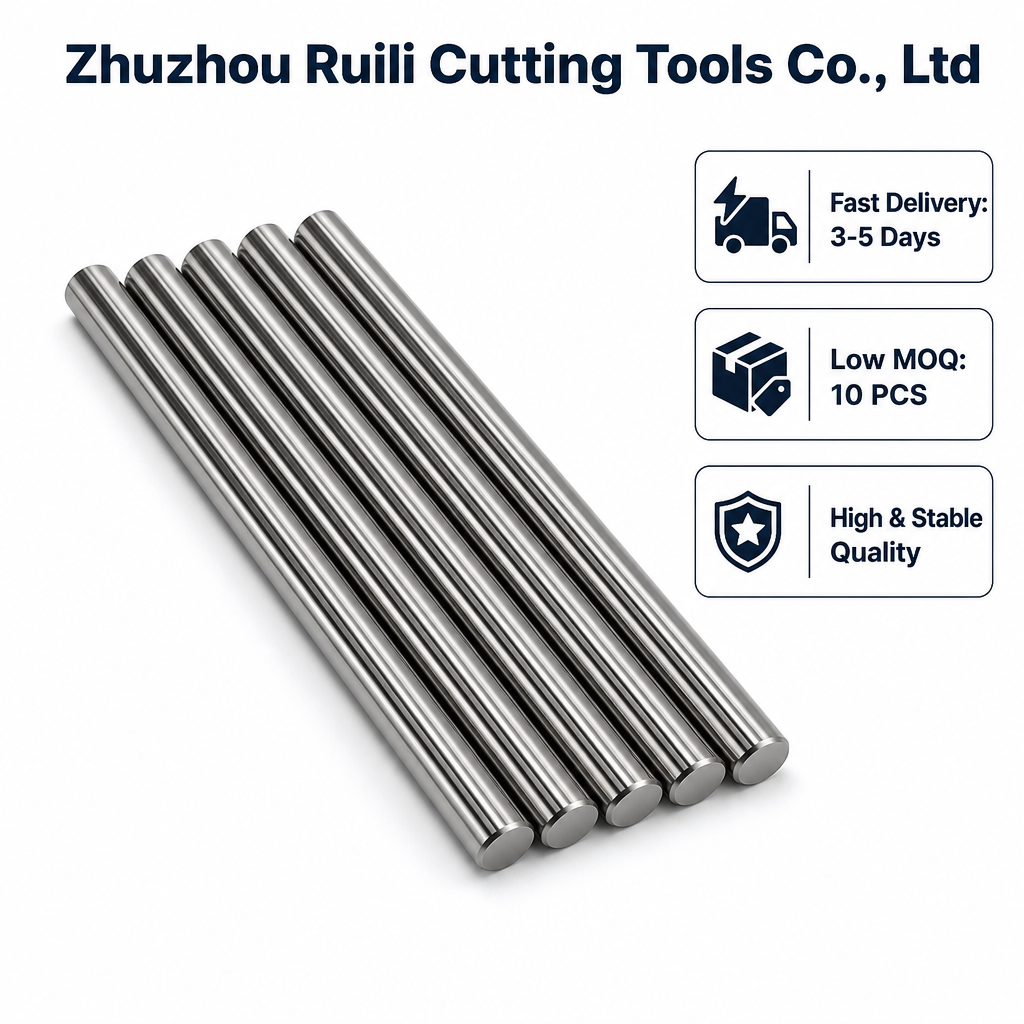
Ready‑stock ground solid carbide rods in YG3X, YG6X, YG8, YG12 grades, produced from 100 % virgin WC‑Co raw‑material. Strictly‑controlled straightness, roundness and diameter tolerance for precision‑tool blank manufacturing.
CTA Contact Zone
Technical Consultation & Custom Orders
📧 Contact Us → /contact‑us.htm
Please provide your target‑tool type, workpiece‑material, cutting‑mode and dimension‑requirements. Obtain free carbide‑rod grade‑selection suggestion and formal quotation.
Bulk Procurement & Global Distributor Partnership
📧 Contact Us → /contact‑us.htm
Wholesale pricing for bulk carbide‑rod blank orders. Support long‑term supply contracts for cutting‑tool manufacturers and industrial distributors.
Disclaimer
The information provided in this article is for general reference purposes only. Actual finished‑tool performance is also affected by grinding quality, tool geometry, coating, machine‑tool rigidity and cutting‑parameters. Please consult our technical team for application‑specific recommendations before large‑volume procurement of carbide‑rod blanks. All grade‑related data is based on standard‑industrial laboratory‑testing environment.