Tungsten Carbide Inserts Case Study: Longer Service Life for CNC Turning and Milling
- Share
- publisher
- Bree
- Issue Time
- Nov 12,2026
Summary
This case study compares standard carbide inserts with our optimized grade inserts in CNC turning and milling, showing how factory grade tuning extends tool life and cuts tool cost for CNC machining workshops.
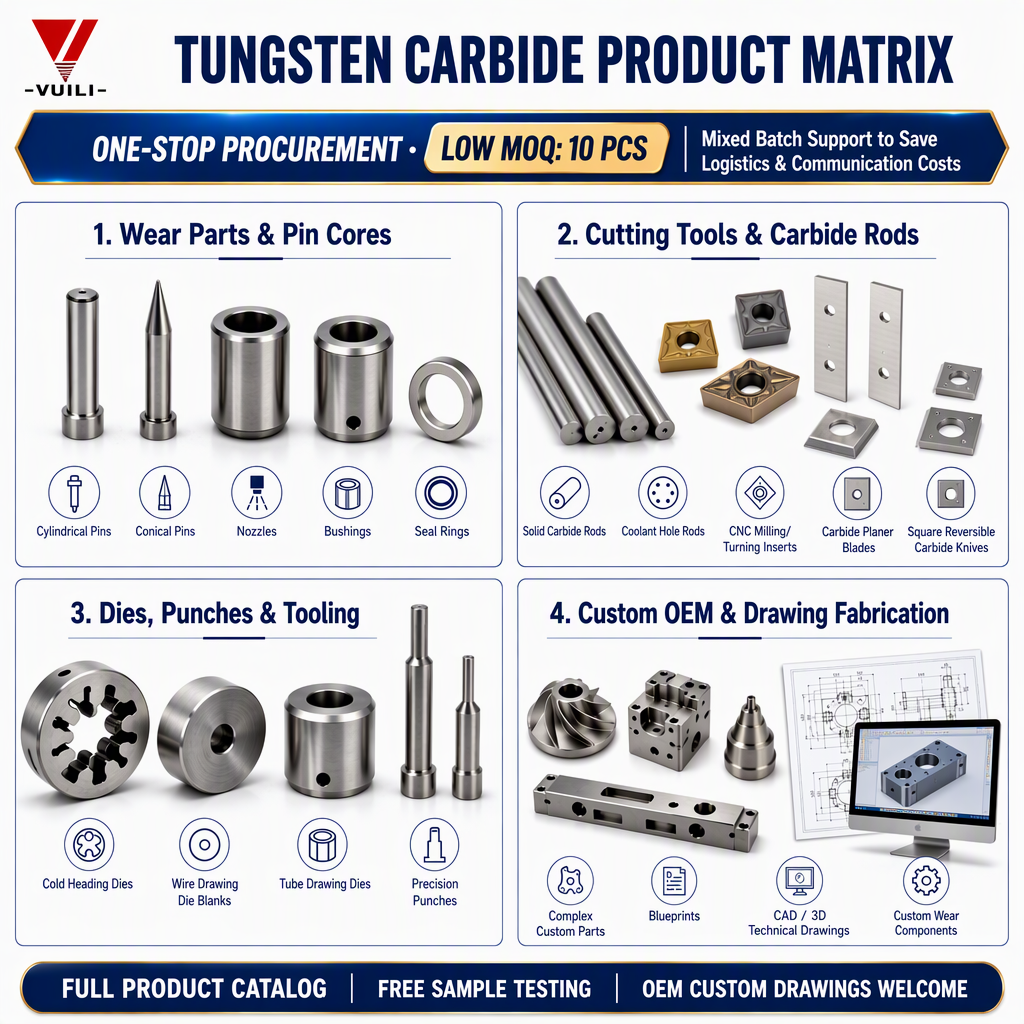
Full Article Structure
1. Common CNC Machining Problems with Carbide Inserts
CNC workshops often face early insert wear, notch wear, thermal cracking or edge chipping. These issues force frequent insert replacement, interrupt CNC programs and raise production cost. Many inserts look identical in shape but differ greatly in carbide substrate formula and sintering quality.
For continuous CNC turning and milling, stable substrate toughness and wear resistance are more important than low unit price.
2. Project Background of This CNC Insert Case
A CNC job shop mainly processes 304 stainless steel and ductile iron on CNC lathes and machining centers. Their original inserts suffered fast flank wear, and the tool life fluctuated a lot between batches. They sent us their cutting parameters and workpiece material, and requested matched carbide insert blanks for coating.
Our team selected and adjusted carbide substrate grade, then supplied blank inserts for their coating workshop to finish TiAlN coating.
3. Test Data: Turning & Milling Insert Comparison
| Machining Type | Workpiece | Original Insert Average Life | Our Carbide Substrate Insert Average Life |
|---|---|---|---|
| Continuous turning | 304 stainless steel | 18 minutes | 32 minutes |
| Interrupted milling | Ductile iron casting | 12 minutes | 21 minutes |
| Finishing turning | Aluminum alloy | 40 minutes | 65 minutes |
After three rounds of repeat cutting tests, the client confirmed the new inserts deliver stable, longer service life and fewer unexpected edge breaks.
4. Factory Grade Adjustment Logic for Longer Insert Life
- For stainless steel turning: Fine grain substrate, balanced wear resistance and thermal shock resistance;
- For interrupted milling of cast iron: Slightly higher cobalt content to improve impact toughness;
- For aluminum finishing: Ultra-fine grain and low binder content to reduce built-up edge;
- Strict sintering control to eliminate internal micro-defects which cause early failure.
We supply uncoated carbide insert blanks. Customers can coat inserts locally according to their own coating process.
5. Operation Tips to Get Maximum Insert Service Life
- Match the carbide grade to your workpiece material first;
- Optimize cutting speed, feed and depth of cut instead of only chasing high speed;
- Use sufficient coolant for heat-sensitive materials like stainless steel;
- Check insert seating and clamping to avoid vibration during cutting.
6. Summary
This tungsten carbide insert case proves that proper carbide substrate design can greatly extend service life for CNC turning and milling. Our factory produces standard and custom shape carbide insert blanks with stable grade consistency. If you have unstable tool life in CNC machining, share your cutting parameters with us for grade recommendation and sample test.
Related Products
Related Articles
Tell us your CNC workpiece material, cutting mode and insert shape. We provide suitable carbide insert blanks and trial samples for life comparison.
Contact Us For Carbide Insert Blanks →Coating performance is based on carbide substrate quality. Consistent carbide blank is the foundation of reliable insert performance.