Tungsten Carbide Grade Selection: A Complete Technical Material Guide for Machining Shops
- Share
- publisher
- Bree
- Issue Time
- Nov 5,2026
Summary
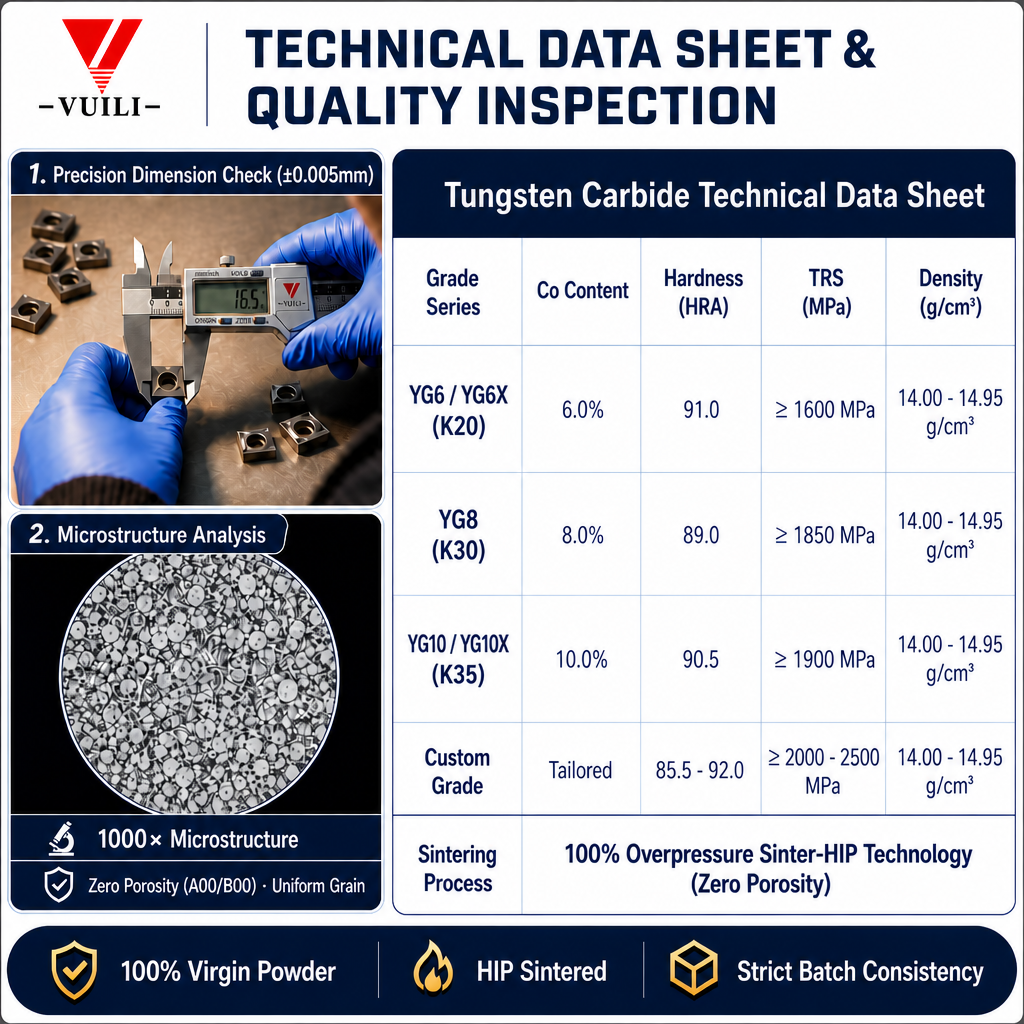
This technical material guide helps machining shops pick the right tungsten carbide grades. Learn how cobalt content, grain size and mechanical properties affect carbide round rods and cutting blank performance for your machining projects.
Full Article Structure
- 1. Introduction: Why Grade Selection Matters for Machining Shops
- 2. Basic Parameters of Tungsten Carbide Grades
- 3. Grade Matching for Common Machining Tasks
- 4. Typical Machining Failure Cases & Grade Adjustment
- 5. Checklist Before You Confirm Carbide Grade
- 6. FAQs for Machiners About Carbide Grade
- 7. Summary: Match Grade With Your Machining Workload
1. Introduction: Why Grade Selection Matters for Machining Shops
For machining shops, carbide round rods, inserts and tool blanks are daily consumables. Many machinists only focus on price and overlook grade differences. Unsuitable carbide grades lead to frequent edge chipping, fast abrasive wear and unplanned downtime. This technical guide helps you select carbide grades properly for stable cutting performance.
2. Basic Parameters of Tungsten Carbide Grades
- Cobalt binder content: controls toughness and hardness balance
- WC grain size: fine grain for sharp cutting edge, coarse grain for shock resistance
- Hardness HRA: higher value delivers better wear resistance
- Transverse rupture strength: reflects the anti-break ability under cutting load
3. Grade Matching for Common Machining Tasks
| Machining Task | Suggested Grade Feature | Common Tool Blanks |
|---|---|---|
| Finishing steel, low vibration | Low cobalt, fine grain, high hardness | Fine boring bars, finishing inserts |
| Rough turning & interrupted cut | Medium cobalt, medium grain, balanced toughness | Rough cutting inserts, end mill blanks |
| Stainless steel & heat resistant alloy | Anti-thermal-crack grade, good hot hardness | Carbide rods for solid end mills |
| Non-ferrous metal, aluminum alloy | Low friction, polished grade, anti-built-up edge | Aluminum cutting blades, engraving rods |
4. Typical Machining Failure Cases & Grade Adjustment
One machining shop used a super-fine grain high-hardness carbide rod for interrupted steel roughing. The cutting edges kept chipping within short machining time. We upgraded to medium cobalt carbide grade. The tool chipping issue disappeared and the total tool cost dropped significantly. It proves toughness is critical for interrupted cutting.
5. Checklist Before You Confirm Carbide Grade
- Workpiece material: steel, stainless steel, aluminum, cast iron etc.
- Cutting type: finishing, roughing, continuous or interrupted cut
- Cooling condition: dry cutting, flood coolant or MQL
- Failure mode you encountered: wear, chipping, thermal crack
- Later coating requirement: TiN, TiAlN, DLC coating
6. FAQs for Machiners About Carbide Grade
Q1: Can I use one carbide grade for all metal cutting?
No. A universal grade can work but cannot achieve optimal tool life for every workpiece material and cutting condition.
Q2: Does fine grain carbide always cut better?
Fine grain carbide holds sharp edges well, but it is brittle and not suitable for heavy interrupted cutting with impact load.
7. Summary: Match Grade With Your Machining Workload
Carbide grade selection is a core technical decision for machining shops. Always match grade parameters with your cutting material, load and cooling condition. Share your machining parameters and failure problems with our team, and we will recommend the suitable carbide grade for your tool blanks and round rods.
CTA Contact Zone
Get Grade Recommendation
📧 Contact Us → /contact-us.htm
Share your machining parameters and workpiece material, we recommend proper carbide grade for your tools.
Ask For Grade Data Sheet
📧 Contact Us → /contact-us.htm
Request hardness, density and toughness data sheet of our carbide grades.
Disclaimer
Grade suggestion is for reference only. Final verification by sample test on your actual machine is strongly recommended, especially for critical cutting applications.