Tungsten Carbide Cold Heading Dies & Pin Cores: Grade Selection for Fastener Production
- Share
- publisher
- Jane
- Issue Time
- Sep 19,2026
Summary
This professional guide focuses on tungsten carbide cold heading dies and pin cores for fastener production. It analyzes working characteristics of cold heading processes, compares applicable carbide grades, explains grade selection rules for different fastener materials and production loads, summarizes failure causes, and provides practical grade matching solutions for screw, bolt and nut cold forging manufacturers.
Full Article Structure
- 1. Introduction: Importance of Carbide Dies & Pin Cores in Fastener Production
- 2. Working Mechanism & Main Failure Modes of Cold Heading Tooling
- 3. Core Carbide Grade Classification for Cold Heading Dies
- 4. Grade Selection for Ordinary Carbon Steel Fasteners
- 5. Grade Matching for Stainless Steel & High-Strength Fasteners
- 6. Pin Core Special Grade Selection Rules
- 7. Full Grade Selection & Application Comparison Table
- 8. Common Grade Selection Mistakes in Cold Forging Workshops
- 9. Service Life Improvement & Daily Maintenance Tips
- 10. Summary & Custom Cold Heading Die Service
1. Introduction: Importance of Carbide Dies & Pin Cores in Fastener Production
Tungsten carbide cold heading dies and pin cores are the core wearable tooling for screw, bolt, nut and rivet cold forging production. Different from cutting tools, cold heading dies bear extreme instantaneous pressure, strong metal extrusion friction and continuous cyclic impact during high-speed fastener stamping. The grade of carbide substrate directly determines die service life, fastener dimensional consistency and workshop production efficiency.
Most fastener factories only replace worn dies with universal carbide grades, ignoring targeted grade matching for different fastener materials, wire hardness and production speeds. Mismatched grades often cause die cracking, cavity wear, pin core breakage, fastener burrs and size deviation, resulting in frequent tool replacement and increased production costs.
This article focuses on the grade selection logic of carbide cold heading dies and pin cores. It analyzes the performance requirements of cold heading working conditions, sorts out suitable grades for carbon steel, stainless steel and high-strength fasteners, summarizes typical failure causes, and provides systematic selection guidelines for fastener manufacturing enterprises.
2. Working Mechanism & Main Failure Modes of Cold Heading Tooling
Cold heading is a high-pressure plastic forming process. The carbide die cavity and pin core continuously squeeze and shape metal wire rods at room temperature, with instantaneous pressure exceeding thousands of tons. Long-term cyclic operation forms three typical failure modes.
Cavity abrasive wear: Metal wire friction causes gradual enlargement of die hole diameter, resulting in oversized fastener size and poor surface finish. This is the most common failure in mass fastener production.
Impact cracking and chipping: Uneven wire hardness, material impurities or equipment vibration cause instantaneous stress concentration, leading to edge cracking and die splitting.
Fatigue failure: Long-term repeated stamping produces internal metal fatigue of the carbide substrate, forming tiny cracks that gradually expand and cause overall die scrapping.
Therefore, cold heading carbide materials must balance three core performances: wear resistance, compressive strength and impact fatigue resistance, which is completely different from cutting tool grade requirements.
3. Core Carbide Grade Classification for Cold Heading Dies
Cold heading dedicated carbide grades are divided into three categories according to cobalt content, grain size and compressive performance, adapting to different fastener production loads and material hardness.
- High-wear fine grain grade (low cobalt): Features ultra-high hardness and excellent abrasive wear resistance. It resists cavity wear during long-term continuous stamping, ensuring long-term dimensional stability of die holes. Suitable for low-hardness wire and stable mass production.
- Balanced medium grain grade (medium cobalt): Balances wear resistance and impact toughness, with strong compressive fatigue resistance. It adapts to most conventional fastener production and is the most versatile grade for cold heading dies.
- High-toughness coarse grain grade (high cobalt): Focuses on impact resistance and crack resistance. It can withstand strong instantaneous stamping pressure and uneven material impact, effectively avoiding die cracking for high-hardness and difficult-to-form materials.
Unlike turning and milling inserts, cold heading dies prioritize compressive strength and fatigue resistance. Excessively hard and brittle grades are prone to cracking, while overly tough grades suffer from fast wear.
4. Grade Selection for Ordinary Carbon Steel Fasteners
Ordinary carbon steel wires (Q235, 4.8-grade carbon steel) have low hardness, stable material texture and small stamping resistance. The main failure mode of dies is abrasive wear rather than impact cracking.
For mass production of ordinary screws, bolts and rivets, fine-grain low-cobalt or standard balanced carbide grades are the best choice. These grades maintain high surface hardness, effectively slow down cavity wear, extend die service life, and ensure consistent fastener outer diameter and thread precision in long-term continuous production.
Using high-toughness high-cobalt grades for carbon steel fasteners will cause unnecessary wear speed acceleration, frequent die hole enlargement and increased tooling replacement costs.
5. Grade Matching for Stainless Steel & High-Strength Fasteners
Stainless steel wire and 8.8/10.9/12.9 high-strength alloy steel wires have high hardness, strong deformation resistance and poor material ductility. The cold heading process generates huge instantaneous pressure and alternating impact load, which greatly tests the toughness and compressive fatigue resistance of carbide dies.
For stainless steel fastener cold heading, medium-high toughness balanced grades are recommended. The optimized cobalt ratio improves impact resistance, avoids edge chipping and micro-cracks caused by high-pressure stamping, while retaining qualified wear resistance to meet mass production needs.
For ultra-high-strength fasteners with strict forming requirements, high-toughness special cold forging grades must be adopted. Such grades have ultra-high compressive strength and anti-fatigue performance, effectively solving die burst and pin core breakage problems in high-load stamping.
6. Pin Core Special Grade Selection Rules
Carbide pin cores are slender stress-bearing parts in cold heading dies, responsible for forming fastener inner holes and tail structures. Compared with die sleeves, pin cores bear more concentrated unit pressure and are more prone to breakage and bending deformation.
Pin cores cannot use ultra-hard brittle fine-grain grades. High-toughness medium and coarse grain grades are specially recommended. Appropriately increased cobalt content enhances structural toughness and bending resistance, avoiding frequent fracture failure of slender pin cores during high-speed stamping.
For micro-small fastener pin cores with tiny diameters, ultra-fine uniform grain high-toughness grades are used to balance hardness and toughness, ensuring no deformation while maintaining forming precision.
7. Full Grade Selection & Application Comparison Table
This table summarizes the optimal carbide grades for cold heading dies and pin cores corresponding to different fastener types and working conditions.
| Fastener Production Scenario | Recommended Carbide Grade | Core Performance Advantage | Tooling Type |
|---|---|---|---|
| Ordinary carbon steel 4.8 fasteners | Fine-grain low-cobalt grade | Ultra-wear resistance, long die life | Cold heading die sleeve |
| Conventional carbon steel mass production | Medium grain balanced grade | Balanced wear & toughness, stable batch production | Die sleeve & conventional pin core |
| Stainless steel fastener stamping | Medium-high toughness grade | Anti-impact, anti-micro-crack, anti-fatigue | Full set cold heading tooling |
| 8.8–12.9 high-strength fasteners | High-toughness cold forging special grade | Ultra-high compressive strength, anti-burst | Heavy-load die & thick pin core |
| Micro precision fastener production | Ultra-fine grain balanced grade | High precision retention, no deformation | Micro pin core & precision die |
| Irregular & special-shaped fasteners | High-toughness coarse grain grade | Strong impact resistance, adapt to uneven stamping load | Custom cold heading dies |
8. Common Grade Selection Mistakes in Cold Forging Workshops
Most tooling losses in fastener factories are caused by incorrect grade matching rather than equipment or process problems.
First mistake: Universal grade for all materials. Using wear-resistant brittle grades for stainless steel and high-strength steel will lead to large-area die cracking and severe tool scrapping.
Second mistake: Ignore pin core grade differences. Matching die sleeve and pin core with the same grade causes frequent pin core breakage due to insufficient local toughness.
Third mistake: Blindly pursuing high hardness. Excessively high hardness reduces toughness, making dies unable to withstand cyclic cold heading impact and resulting in fatigue failure.
Fourth mistake: Neglecting batch production load. Long-term high-frequency stamping requires fatigue-resistant grades, while ordinary grades will age and fail quickly.
9. Service Life Improvement & Daily Maintenance Tips
Reasonable grade matching plus standardized maintenance can maximize the service life of carbide cold heading dies and pin cores.
- Strictly match grades according to wire hardness: Low-hardness material prioritizes wear resistance; high-hardness material prioritizes toughness.
- Separate grade collocation for die sleeve and pin core: Higher toughness configuration for pin cores to avoid breakage failure.
- Keep wire surface clean: Remove rust and impurities to reduce abrasive wear of die cavities.
- Maintain stable equipment pressure: Avoid overload stamping and mechanical vibration causing stress concentration.
- Regularly inspect die cavity wear: Timely polish and repair slight wear to prevent dimensional deviation expansion.
10. Summary & Custom Cold Heading Die Service
Tungsten carbide cold heading dies and pin cores have completely different grade selection logic from cutting tools. Carbon steel fasteners adapt to wear-resistant fine-grain grades, stainless steel and high-strength fasteners require high-toughness anti-fatigue grades, and pin cores need targeted high-toughness configuration to prevent breakage.
Scientific grade matching can effectively solve die wear, cracking and pin core fracture problems, stabilize fastener production precision, and greatly reduce comprehensive tooling replacement costs. Fastener enterprises should abandon universal grade usage and formulate targeted tooling matching schemes according to product positioning.
We supply full-series cold heading dedicated carbide grades, including standard die sleeves, pin cores and custom special-shaped cold forging tooling, supporting personalized size and grade customization for various fastener production lines.
Our Cold Heading Carbide Products
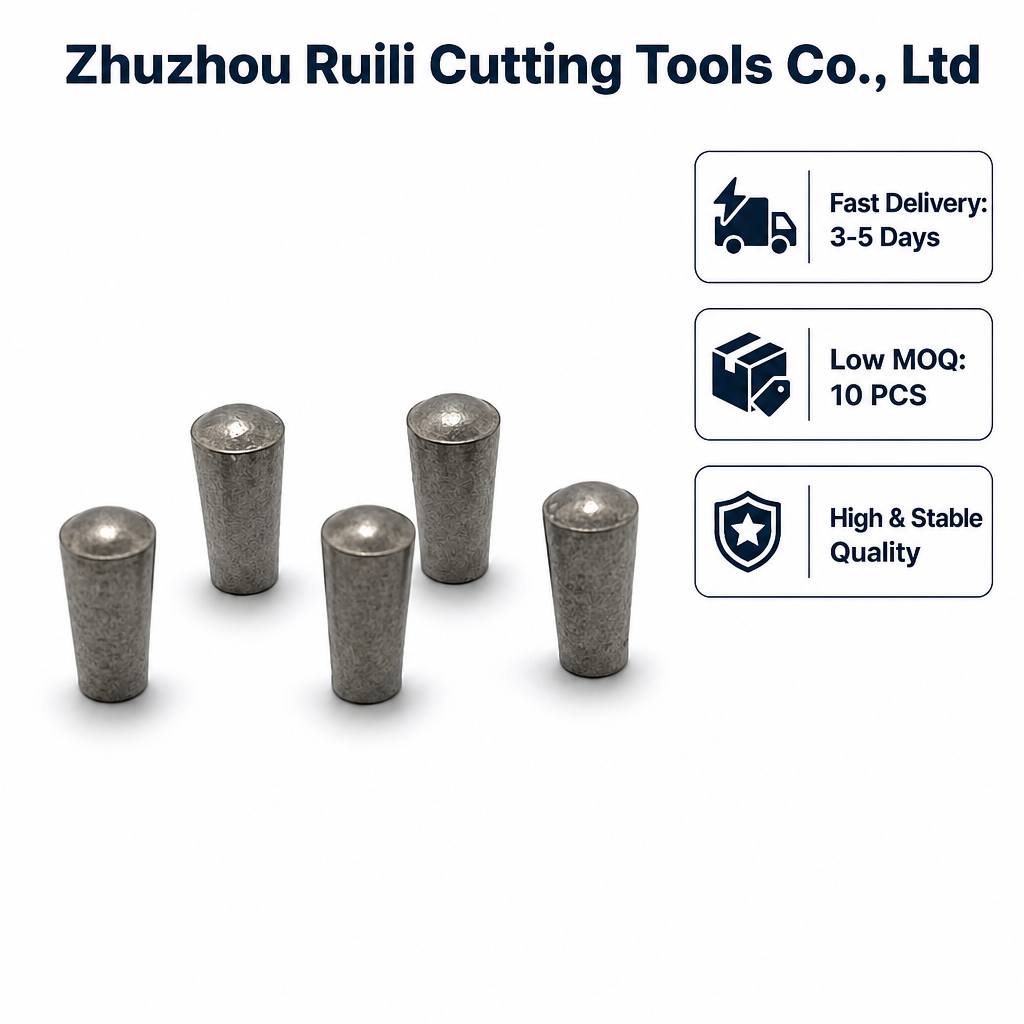
Precision Carbide Pin Cores
High-toughness custom pin cores of various specifications, solving breakage and deformation problems in micro fastener and high-strength fastener forming processes.
CTA Contact Zone
Grade Consultation & Custom Quotation
📧 Contact Us → /contact-us.htm
Provide your fastener type, wire material and production speed, get free professional carbide grade matching suggestions and accurate quotation.
Bulk Procurement & Long-Term Cooperation
📧 Contact Us → /contact-us.htm
Factory direct sales of cold heading dies and pin cores, stable batch quality and competitive prices for fastener manufacturers.
Disclaimer
The grade selection suggestions in this article are for general industrial reference. Actual tooling service life is affected by stamping pressure, equipment condition, wire quality and production frequency. Please consult our technical team for targeted grade matching for special fastener production processes.