Tungsten Carbide Blanks for Wear-Part Operating Conditions and Industrial Solutions
- Share
- publisher
- Bree
- Issue Time
- Nov 11,2026
Summary
Discover tungsten carbide blanks engineered for wear-part operating conditions. Learn our industrial solutions for abrasion, erosion and continuous friction scenarios.
Full Article Structure
1. What Wear-Part Operating Conditions Demand
Wear parts run under long-term friction, particle abrasion, slurry erosion or sliding contact. Unlike cutting tools, their core failure is not chipping from impact, but gradual material loss. The operating conditions require stable wear resistance, consistent density and uniform grain structure across the whole blank.
Standard steel or alloy parts wear out quickly under these harsh conditions. Tungsten carbide blanks become the preferred substrate because they balance hardness and moderate toughness for continuous wear environments.
2. Main Wear Modes for Industrial Wear Parts
- Abrasive wear: hard solid particles rub against the part surface, common in mining, agriculture and plastic extrusion;
- Sliding friction wear: two metal surfaces keep sliding under pressure;
- Slurry erosion: mixed liquid and fine particles impact the surface;
- Low-frequency impact plus abrasion: light shock combined with continuous particle friction.
Each wear mode needs a different carbide blank formula. Fine grain grades work best for abrasive wear, while slightly higher cobalt grades handle mixed impact-abrasion conditions.
3. Tungsten Carbide Blank Solutions for Wear Scenarios
| Wear Operating Condition | Carbide Blank Recommendation | Typical Finished Part |
|---|---|---|
| Pure abrasive wear, no strong impact | Fine grain, low cobalt carbide blank | Wear strips, nozzles, guide blocks |
| Sliding seal, high contact pressure | Medium grain, balanced hardness blank | Seal rings, wear sleeves |
| Slurry erosion and particle impact | Medium-high cobalt, high toughness blank | Valve cores, flow control components |
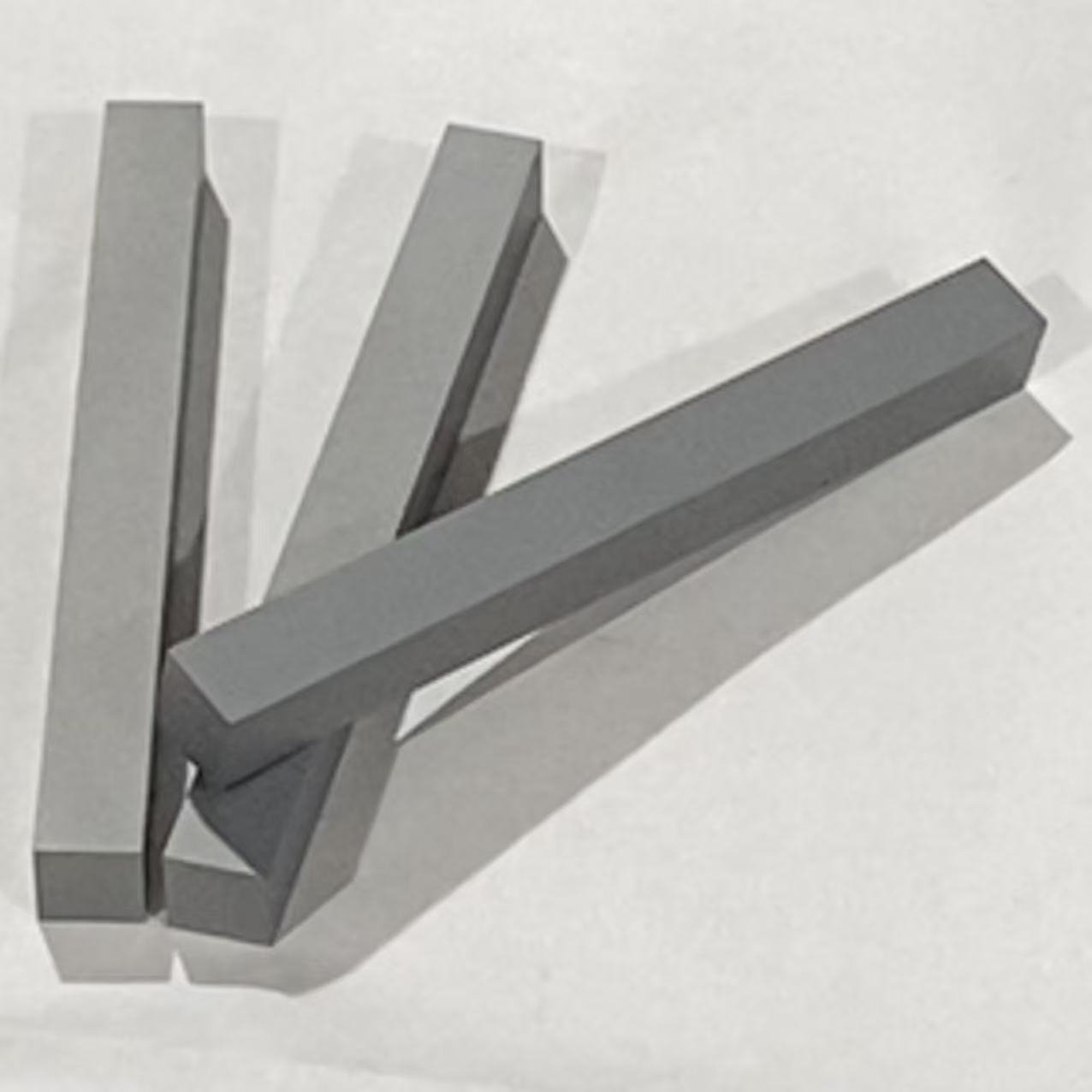
We supply solid carbide blanks in strips, rounds, squares and custom near-net shapes, ready for your secondary machining.
4. Blank Manufacturing Controls for Stable Wear Resistance
Wear performance fails easily if the blank has density deviation, pore segregation or uneven grain distribution. Our production controls focus on these key points:
- 100% virgin WC powder, no recycled powder to avoid inconsistent wear;
- Uniform pressing and full sintering to reach stable density;
- Batch traceability of powder lots and sintering curves;
- Hardness inspection on multiple positions of each blank.
5. Sample Validation for Wear Application
Wear life data can only be trusted after testing under your real operating conditions. We provide small blank samples for on-site wear comparison. Record the working medium, contact pressure, temperature and running time to judge whether the blank grade matches your wear condition.
6. Summary
Tungsten carbide blanks are reliable industrial solutions for different wear-part operating conditions. By matching grain size and binder content to your wear mode, you can greatly extend service life and reduce part replacement frequency. Send us your working condition description and drawing for blank quotation and samples.
Related Products
Related Articles
Tell us your wear operating conditions and blank dimension requirements. We provide matched carbide blank grades and sample support for your wear component projects.
Contact Us For Carbide Wear Blanks →This article covers general wear condition guidance. Final grade selection needs field wear test verification.