Technical Material Guides for Tungsten Carbide Round Bar Production
- Share
- publisher
- Bree
- Issue Time
- Nov 20,2026
Summary
This technical guide introduces the full production workflow of tungsten carbide round bars, including powder mixing, pressing, sintering, grinding and quality inspection, helping buyers understand grade selection, tolerance control and surface options for carbide rods.
Full Article Structure
1. Overview of Tungsten Carbide Round Bars
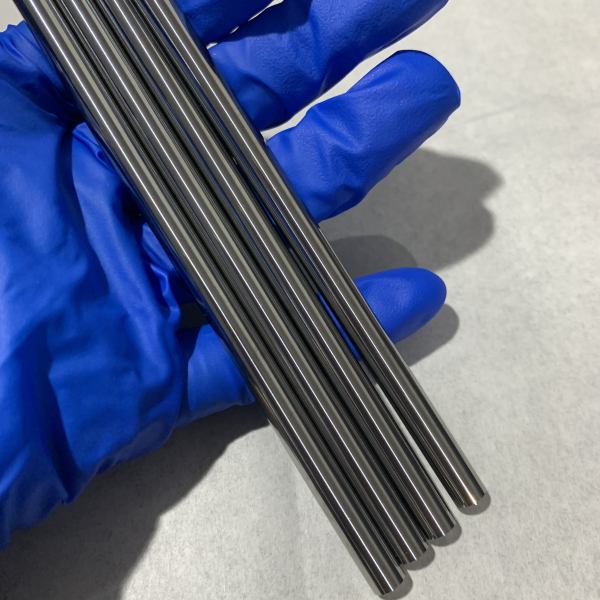
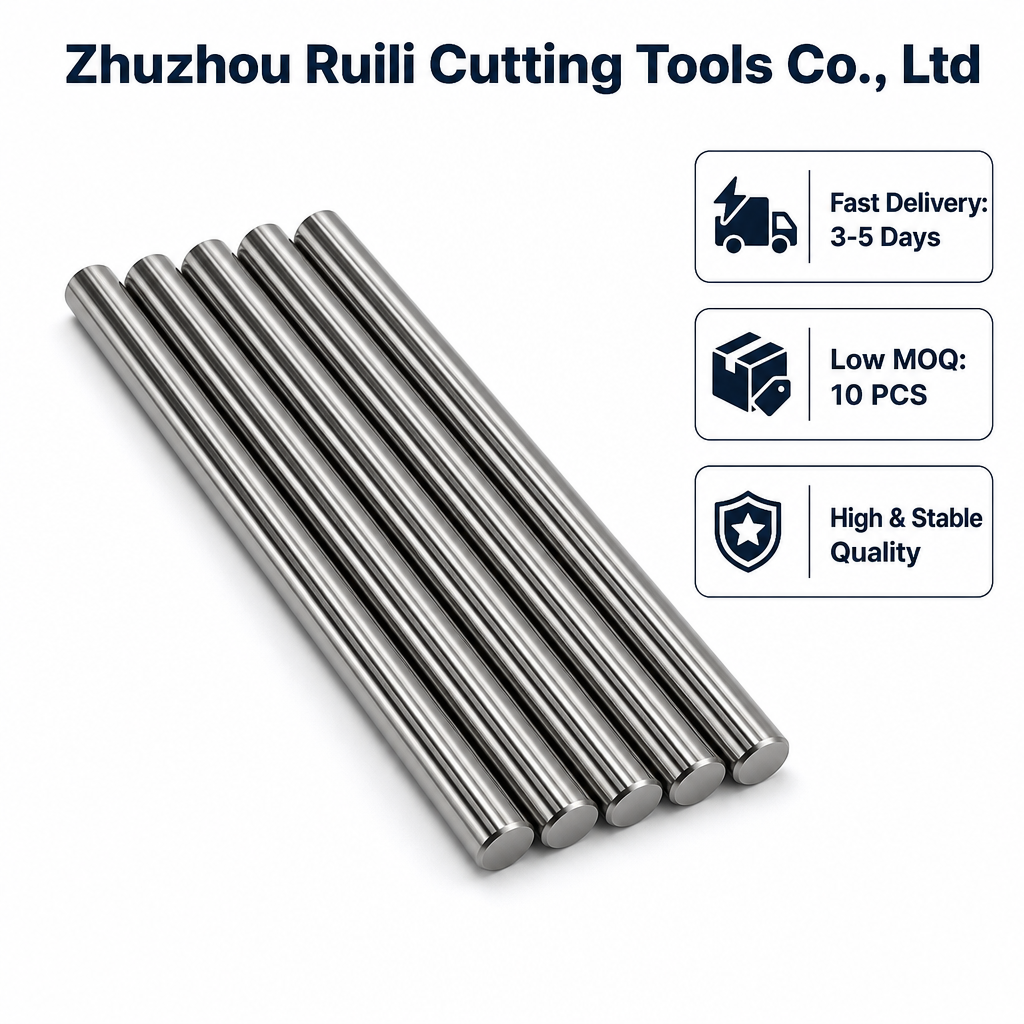
Tungsten carbide round bars, also known as carbide rods, are the basic blank material for manufacturing drill bits, end mills, boring bars and wear pins. Different cobalt content grades directly affect hardness, toughness and wear performance. Custom diameter, length and internal coolant holes are available for OEM tool makers.
2. Raw Powder Formulation and Mixing
WC powder and cobalt binder are proportioned according to the target grade. Uniform mixing and milling guarantee consistent microstructure. Improper mixing will lead to uneven hardness and local chipping during later machining. Our workshop strictly controls milling time and powder particle size.
3. Compaction and Forming Process
Carbide powder is pressed into green rods by extrusion or dry pressing. Extrusion is the mainstream process for long straight round bars. Green bodies have low strength and need careful handling before sintering. We can produce solid rods and rods with single or double coolant holes.
4. Sintering and Dimensional Shrinkage Control
Debinding and vacuum sintering make the green body densified. Shrinkage rate is fixed for each grade, which is the core basis for pre-setting the green size. Stable sintering curve reduces bending, cracking and internal porosity. Sintered blanks are the semi-finished state before grinding.
5. Centerless Grinding and Finishing
Most carbide round bars require centerless grinding to achieve tight diameter tolerance and straightness. Raw sintered, ground and polished surfaces are optional. Precision grinding removes sinter skin and meets the drawing requirements for tool blank processing.
6. Grade Selection and Quality Check
| Grade Type | Typical Application |
|---|---|
| Low cobalt YG6 | High wear resistance, for wear parts and finishing tools |
| Medium cobalt YG8 | Balanced toughness and wear, general machining blanks |
| High cobalt YG15 | Good impact resistance, for percussion and rough working |
Finished rods are inspected for diameter, straightness, surface defect and hardness. We provide test reports for bulk orders as requested.
7. Summary
The whole production of carbide round bars covers powder preparation, forming, sintering and precision grinding. Grade selection, shrinkage control and grinding accuracy determine the final quality. Send us your diameter, length, hole requirement and working condition, we will quote suitable carbide rod solutions.
Tell us your required size, grade and surface finish for carbide round bars, our engineers support custom carbide rod production for cutting tool manufacturers.
Solid carbide rods, coolant hole carbide round bars, ground and polished tungsten carbide blanks available.