Rleey | Tungsten Carbide Round Blanks: How to Select Diameter & Length for Custom Tool Fabrication
- Share
- publisher
- Bree
- Issue Time
- Oct 12,2026
Summary
Rleey supplies solid tungsten carbide round blanks for custom tool manufacturing. Learn key rules to choose the correct diameter and length of carbide rod blanks for end mills, drills and wear component fabrication.
Tungsten Carbide Round Blanks: How to Select Diameter & Length for Custom Tool Fabrication
Table of Contents
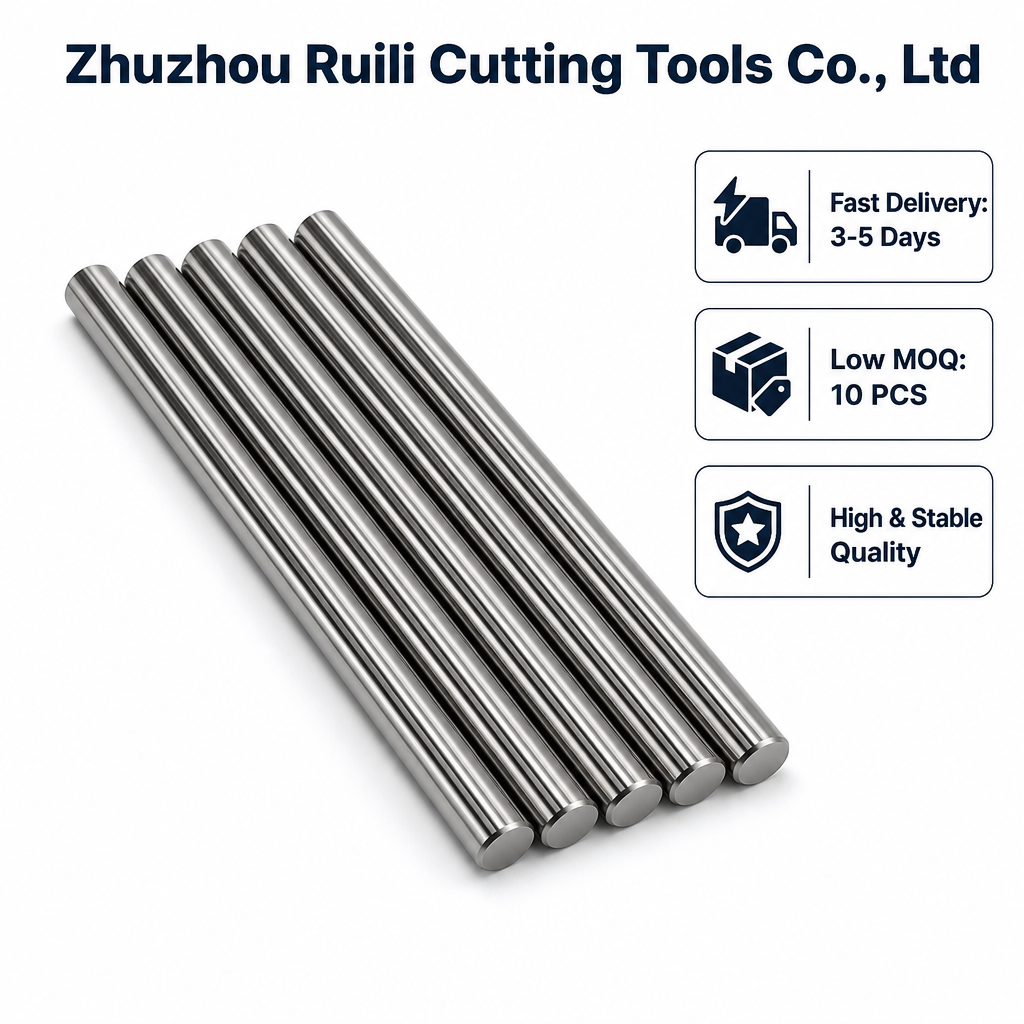
Tungsten carbide round blanks are sintered solid carbide rods, the raw stock used to fabricate custom cutting tools, wear pins, drills and end mills. Choosing improper diameter or length leads to material waste, extra grinding time or insufficient stock for final machining. Rleey supplies precision carbide round blanks in standard and custom sizes, helping toolmakers select suitable blank dimensions for their custom tool projects. Carbide round blanks are unfinished sintered cylindrical bars. They are not final finished parts. Tool manufacturers perform OD grinding, cutting, fluting and edge machining to turn these blanks into finished drills, end mills or wear parts. The blank size must be larger than the final finished dimension to leave enough material for grinding and machining operations. Blank length calculation needs to consider finished tool length, cut-off waste, clamping stock and extra margin. If you cut multiple small components from one long carbide rod, calculate how many pieces you can get from each blank plus saw kerf loss. Longer standard blanks usually have better unit pricing, but you need to confirm your equipment can hold and process long carbide bars safely. Allowance depends on your grinding process and required surface finish. Too little allowance risks leftover surface defects from sintering; too much allowance increases machining cost and cycle time. A: Yes, we can cut sintered carbide round blanks into custom lengths as requested. Tolerance for cut ends can be controlled according to your requirements. A: Common standard lengths are 100mm, 330mm. Custom cut lengths are available upon drawing or specification request. A: Unground sintered blanks need larger grinding stock. Pre-ground blanks have minimal outer skin removal and less allowance required.Introduction
What Are Tungsten Carbide Round Blanks
Key Rules for Diameter Selection
How To Pick The Right Blank Length
Grinding & Machining Allowance Considerations
Final OD Range
Suggested OD Grinding Allowance
Length Cut Allowance
≤ 3mm
0.05 ~ 0.10 mm
1~2 mm per cut
3mm ~12mm
0.10 ~0.20 mm
1~2 mm per cut
>12mm
0.20 ~0.35 mm
2~3 mm per cut
Common Size Selection Mistakes To Avoid
FAQ
Q: Can Rleey cut carbide round blanks to custom fixed lengths?
Q: What is the standard length of carbide round blanks?
Q: Do I need different allowance for ground vs unground carbide blanks?