Rleey | Buying Guide for Custom Tungsten Carbide Punches & Dies for Cold Forging
- Share
- publisher
- Jane
- Issue Time
- Oct 21,2026
Summary
Custom tungsten carbide punches and dies are core tooling for metal cold forging, widely used to manufacture bolts, nuts, rivets and other fasteners. This article outlines critical factors buyers need to evaluate before placing orders, including carbide grade selection, surface finish, dimensional tolerance, pre-stress sleeve design, common failure modes, in-process QC and sample validation.
What to Consider When Buying Custom Carbide Punches and Dies for Cold Forging
Table of Contents
- 1. Introduction: Carbide Tooling for Cold Forging
- 2. Analyze Your Cold Forging Working Load
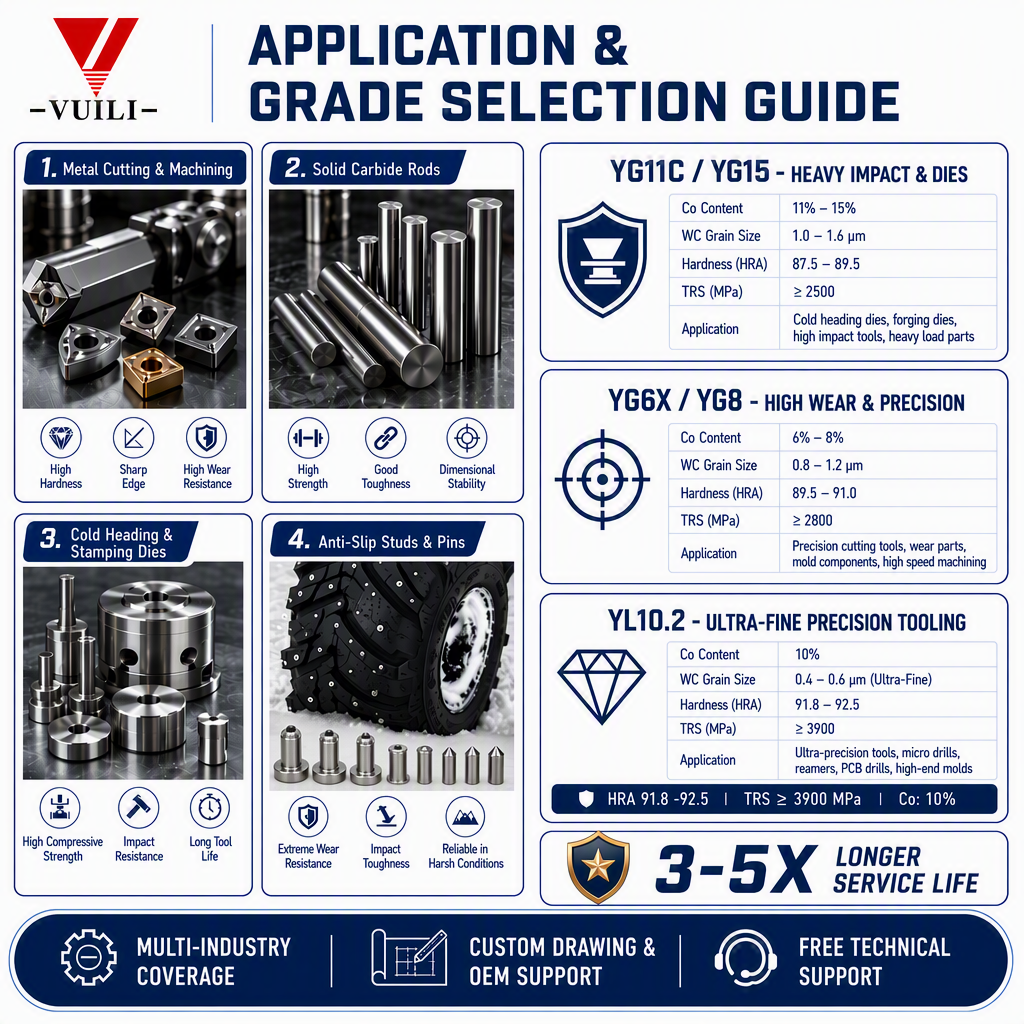
- 3. Tungsten Carbide Grade Selection for Punches & Dies
- 4. Critical Design Considerations: Pre-Stress, Tolerance & Surface Finish
- 5. Machining & Edge Treatment Requirements
- 6. Common Cold Forging Tool Failures & Preventive Tips
- 7. QC Checks & Sample Validation Before Mass Production
- 8. FAQ
Custom tungsten carbide punches and dies are the core tooling for metal cold forging processes, widely used to produce fasteners such as bolts, nuts, rivets, pins and sleeves. Cold forging applies extreme compressive force to deform metal at room temperature. Under high cyclic pressure, ordinary steel tools wear quickly and crack easily. Tungsten carbide tooling delivers much higher compressive strength and wear resistance to extend production runs. However, many buyers experience short tool life due to improper carbide grade selection, poor die design or low-precision machining. This guide covers the key points you need to review when sourcing custom carbide punches and dies for cold forging projects. Before confirming drawings and material, define your cold forging operating conditions. These parameters directly affect carbide grade and tool structure design: High alloy steel forging generates higher forming pressure and friction, requiring tougher carbide grades and optimized pre-stress design. Cold forging dies need outstanding compressive strength rather than just high hardness. Higher cobalt carbide improves toughness to resist fatigue cracking under repeated impact pressure. For fine surface requirements and low-abrasion conditions, medium grain grades are preferred. Pre-stress assembly is one of the most important design factors for cold forging carbide dies. The carbide insert is fitted inside a steel shrink ring to create compressive pre-stress, which offsets tensile stress generated during forging and prevents die splitting. Without proper pre-stress, carbide dies tend to crack quickly even if the material grade is correct. Carbide punches and dies require high-precision grinding and polishing. EDM is often used for complex cavity shapes, but the EDM recast layer must be fully removed by subsequent polishing. The recast layer contains microcracks and will lead to early die failure under cyclic cold forging loads. All sharp edges need controlled edge honing to eliminate micro-chipping risk. For critical cold forging tooling, HIP sintered carbide blanks are recommended to eliminate internal micro-pores and improve fatigue resistance. Good tool design and high-quality carbide blank can reduce most failure modes, but on-site lubrication and machine maintenance also play important roles. For custom cold forging punches and dies, sample testing is strongly recommended before bulk orders. Our QC lab performs these tests for tool blanks and finished tooling: After sample tooling is manufactured, customers can run field forging tests to verify tool life and part quality before mass production release. A: Most carbide dies for high-pressure cold forging require shrink-fit steel sleeves. Small low-pressure forming tools may work without pre-stress, but tool life will be limited. A: Yes, we can supply carbide inserts only or complete assemblies including steel pre-stress sleeves according to customer drawings. A: Lead time depends on tool complexity, machining workload and sample validation. Simple custom dies take shorter cycles, while complex multi-cavity tooling requires longer production and inspection time.1. Introduction: Carbide Tooling for Cold Forging
2. Analyze Your Cold Forging Working Load
3. Tungsten Carbide Grade Selection for Punches & Dies
Carbide Grade Type
Cobalt Content
Performance Characteristics
Typical Application
Medium Grain
8% Co
Balanced wear resistance and compressive strength
Low carbon steel fastener dies, general cold forging
Medium-Coarse Grain
10% Co
High toughness, excellent resistance to crack propagation
High pressure forming, stainless steel, heavy-duty punches
Coarse Grain
12% Co
Maximum impact and compression resistance
Severe cyclic load, large deformation cold forging
4. Critical Design Considerations: Pre-Stress, Tolerance & Surface Finish
5. Machining & Edge Treatment Requirements
6. Common Cold Forging Tool Failures & Preventive Tips
7. QC Checks & Sample Validation Before Mass Production
8. FAQ
Q1: Do all carbide cold forging dies need a steel pre-stress sleeve?
Q2: Can you produce both carbide punch inserts and matching steel shrink rings?
Q3: What is the typical lead time for custom cold forging carbide punches and dies?