How Our Factory Capability Solved Clients’Hard Alloy Rod Machining Challenges: Real Case Studies
- Share
- publisher
- Bree
- Issue Time
- Sep 19,2026
Summary
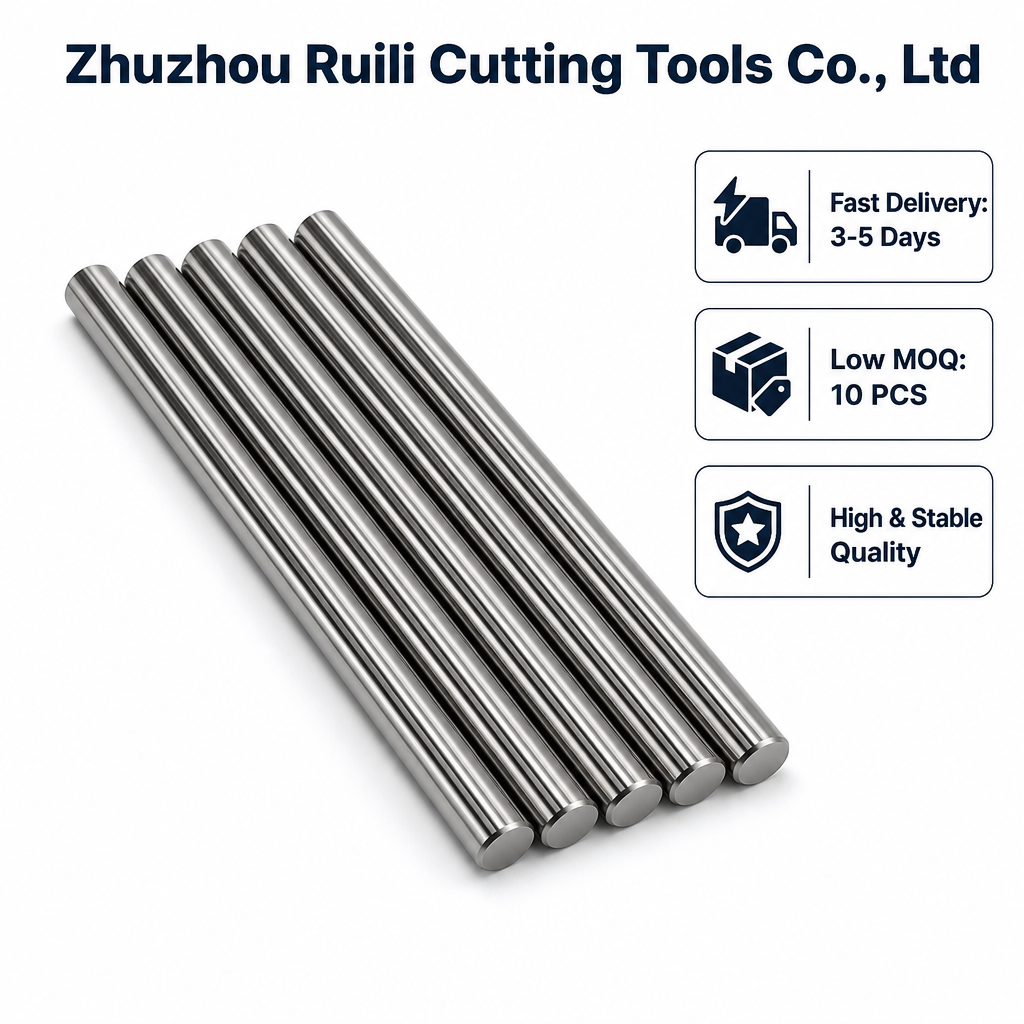
Read real case studies to learn how our factory capability solves hard alloy rod machining challenges. We supply ground carbide rods, blank rods and custom carbide round bars for cutting tool manufacturers.
Article Structure
- 1. Introduction: Common Machining Pain Points of Hard Alloy Rods
- 2. Our Factory Capability for Hard Alloy Rod Production
- 3. Case 1: Precision Ground Carbide Rods with Strict Diameter Tolerance
- 4. Case 2: Long Length Carbide Rods for End Mill Blank Production
- 5. Case 3: Grade Adjustment to Solve Chipping Issue During Tool Fabrication
- 6. How Our Process Control Avoids Rod Machining Troubles
- 7. Get Support for Your Hard Alloy Rod Project
1. Introduction: Common Machining Pain Points of Hard Alloy Rods
Many tool manufacturers face various troubles when processing hard alloy rods. Uneven material density, poor straightness, unstable diameter tolerance and surface defects will lead to high scrap rates during secondary grinding and cutting. Choosing a carbide supplier with strong manufacturing capability is the key to reducing your machining risks.
Our factory specializes in producing solid carbide rods. We help clients solve typical machining challenges through stable raw material formula, sintering control and precision outer diameter grinding.
2. Our Factory Capability for Hard Alloy Rod Production
We complete the whole carbide rod production inside our workshop, including powder mixing, pressing, vacuum sintering and precision OD grinding. We can produce blank rods, ground rods and polished rods with different WC-Co grades such as K10, K20, K30.
Main Rod Specifications
- Diameter range: 2mm ~ 50mm
- Length: standard lengths & custom cut-to-length service
- Tolerance: standard grinding tolerance & ultra-precision tolerance optional
- Grades: customized WC-Co formula according to your machining requirements
We can adjust grain size and cobalt content to balance hardness and toughness, matching your downstream machining process.
3. Case 1: Precision Ground Carbide Rods with Strict Diameter Tolerance
A European tooling manufacturer needed K30 ground carbide rods. Their old supplier had unstable diameter deviation, which caused extra grinding work and high waste. Our factory controlled the grinding tolerance within ±0.003mm.
We delivered batch products with consistent OD size. The client greatly reduced their material scrap rate and saved processing time on CNC grinders.
4. Case 2: Long Length Carbide Rods for End Mill Blank Production
One customer required long carbide rods for making long-series end mills. Long carbide blanks are easy to bend after sintering. Our sintering and straightening process guaranteed good straightness for 330mm long rods.
The client cut the long rods into small pieces for end mill production, and achieved stable yield for mass production orders.
5. Case 3: Grade Adjustment to Solve Chipping Issue During Tool Fabrication
A customer found frequent edge chipping when cutting their carbide rods. Our technical team analyzed the working condition and changed the carbide grade to higher toughness K30 material.
After material adjustment, chipping disappeared during their tool making process. The client kept long-term repeat orders after sample verification.
6. How Our Process Control Avoids Rod Machining Troubles
We inspect every batch of carbide rods before shipment. QC items cover density, hardness, diameter, straightness and surface defect inspection.
- Powder inspection to guarantee uniform raw material
- Sintering temperature monitoring to avoid internal material defects
- Full dimensional check after precision grinding
- Batch records reserved for traceability
Strict QC helps our customers minimize unexpected machining problems on their side.
7. Get Support for Your Hard Alloy Rod Project
If you meet machining challenges when using hard alloy rods, send us your drawing and application information. Our engineers can recommend suitable carbide grade and rod specifications for your production.
Discuss Your Carbide Rod Project →