How Carbide Turning Inserts Improve Machining Stability for Steel Parts
- Share
- publisher
- Bree
- Issue Time
- Nov 23,2026
Summary
Vibration, poor surface roughness and short insert life are frequent issues during carbon and alloy steel turning. This article shares our factory machining case, covering carbide grade selection, chip breaker geometry, coating options and optimized cutting parameters to boost machining stability and reduce unexpected tool breakage.
Full Article Structure
1. Common Stability Problems in Steel Turning
When turning carbon steel and alloy steel on CNC lathes, operators often face chatter marks, inconsistent surface finish, edge chipping and unpredictable insert lifespan. These issues usually come from mismatched carbide substrate, improper chip breaker shape or unsuitable cutting speed. Even high-grade inserts will fail quickly without correct geometry design.
2. How Carbide Turning Inserts Control Cutting Vibration
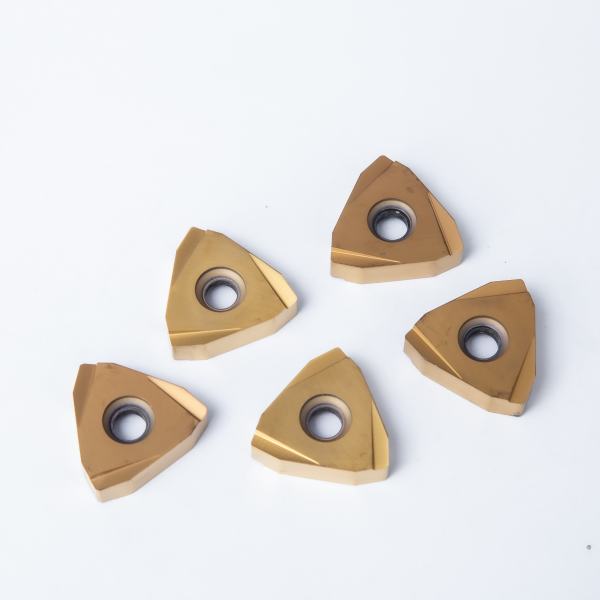
Stable turning relies on balanced hardness and toughness of the carbide substrate. Fine grain carbide turning inserts deliver higher rigidity while maintaining enough impact resistance. Optimized rake angle reduces cutting force, which suppresses vibration during continuous turning. Coating layers like TiAlN also lower friction and heat build-up at the cutting edge.
3. Real Factory Machining Case for Alloy Steel Shaft
One of our European clients processed 42CrMo alloy steel transmission shafts. The original imported inserts suffered heavy chatter, with only 80 parts per edge. Our technical team recommended coated CNMG carbide turning inserts with a special negative chip breaker. After trial:
- Surface roughness Ra improved from 2.4μm to 0.8μm
- Tool life raised to 240 pieces per cutting edge
- Chatter marks fully eliminated, rework rate dropped by 92%
We adjusted the edge hone size to suit continuous heavy cutting, without extra modification on the client’s existing CNC lathe.
4. Chip Breaker & Coating Selection Guide
| Steel Type | Chip Breaker Type | Suggested Coating |
|---|---|---|
| Low carbon steel | Wide open chip breaker | TiN / TiCN |
| Alloy structural steel | Medium chip breaker | TiAlN |
| Hardened steel (HRC 40+) | Small closed chip breaker | AlTiN |
5. Recommended Cutting Parameters
For general alloy steel finishing with carbide turning inserts: cutting speed 120–180 m/min, feed rate 0.12–0.25 mm/r, depth of cut 0.3–1.2 mm. For rough turning, reduce speed and increase feed to avoid edge overload. Dry cutting is acceptable for coated grades, while coolant is suggested for strict surface requirements.
6. Summary
Well-designed carbide turning inserts directly solve vibration and stability problems for steel turning. Substrate grain, edge preparation, chip breaker and coating must match your workpiece material and processing target. Send us your steel grade and machining requirements, we can select or customize suitable CNC turning tool inserts for your production line.
Share your steel workpiece material, rough/finish turning target and machine condition, our engineers will recommend matched carbide turning inserts and cutting parameters.
Standard and custom carbide turning inserts for carbon steel, alloy steel and hardened steel turning available.