Coated vs Uncoated Carbide Blades: Which Is Better for Your Cutting Application
- Share
- publisher
- Jane
- Issue Time
- Sep 18,2026
Summary
This article compares coated and uncoated carbide blades in material characteristics, surface performance, cutting temperature resistance, wear life and application scenarios. It analyzes the core advantages and limitations of coated and uncoated blades, summarizes practical selection rules for different cutting materials and processes, and helps users choose the best carbide blade type for specific cutting applications.
Full Article Structure
- 1. Introduction: Core Differences Between Coated and Uncoated Carbide Blades
- 2. What Are Uncoated Carbide Blades? Pros & Cons
- 3. What Are Coated Carbide Blades? Pros & Cons
- 4. Full Performance Comparison Table
- 5. Best Applications for Uncoated Carbide Blades
- 6. Best Applications for Coated Carbide Blades
- 7. Real-World Cutting Application Cases
- 8. Common Selection Mistakes to Avoid
- 9. Quick Selection Guide by Workpiece & Process
- 10. Final Summary & Custom Blade Support
1. Introduction: Core Differences Between Coated and Uncoated Carbide Blades
Carbide blades are essential consumables for industrial cutting, turning, milling and sharpening processes. When purchasing carbide cutting tools, buyers and machinists always face a core choice: coated carbide blades or uncoated carbide blades. Many users simply believe coated blades are always better due to higher price, or choose uncoated blades blindly to save costs, resulting in reduced cutting quality and shortened tool life.
In fact, coating is only a surface strengthening process. Uncoated blades rely entirely on the inherent hardness and toughness of the carbide substrate, while coated blades add protective coating layers such as TiN, TiCN and AlTiN on the substrate surface. Each type has its own suitable processing scenarios, material adaptability and cost advantages.
This article comprehensively compares coated and uncoated carbide blades in terms of surface performance, heat resistance, wear resistance, cutting smoothness and procurement cost. It clarifies applicable workpiece materials and processing methods, corrects common selection misunderstandings, and provides reliable reference for industrial cutting and tool processing enterprises.
2. What Are Uncoated Carbide Blades? Pros & Cons
Uncoated carbide blades are pure WC-Co carbide substrates without any surface coating treatment. The blade surface retains the original grinding state of carbide material, with no additional high-temperature protective layer. The cutting performance completely depends on the formula, grain size and hardness of the carbide blank.
Advantages of Uncoated Carbide Blades
- No coating peeling risk: The integrated carbide structure avoids coating flaking, edge peeling and layer failure during cutting.
- Ultra-sharp edge retention: Uncoated blades can be polished to extremely sharp cutting edges, suitable for high-finish precision trimming.
- Excellent anti-adhesion performance for soft metals: Smooth original surface effectively reduces chip buildup and built-up edge on aluminum, copper and plastic materials.
- Lower procurement cost: No coating process cost, more cost-effective for low-load and short-cycle processing scenarios.
- Good impact resistance: No brittle coating layer, not easy to crack under intermittent cutting and vibration conditions.
Limitations of Uncoated Carbide Blades
- Poor high-temperature resistance: Direct exposure to cutting high temperature causes rapid thermal wear and oxidation wear.
- Limited wear resistance: Fast abrasive wear when cutting hard steel, cast iron and alloy materials, short service life.
- Not suitable for high-speed cutting: High friction heat accumulates quickly, leading to rapid tool passivation.
3. What Are Coated Carbide Blades? Pros & Cons
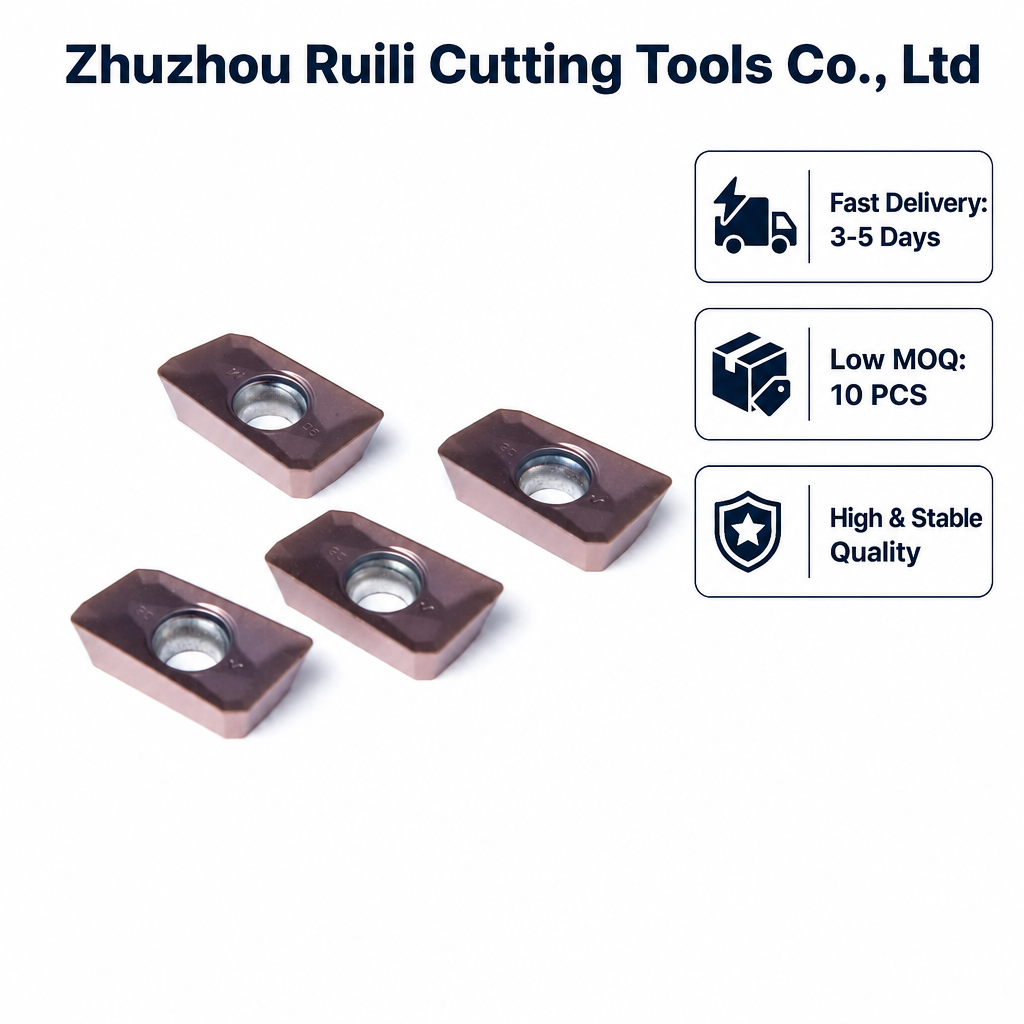
Coated carbide blades are based on high-precision ground carbide substrates, with one or multiple layers of nano-coating deposited by PVD or CVD technology. Common coating materials include TiN (gold coating), TiCN, AlTiN (black/purple coating) and multi-layer composite coatings. The coating acts as a thermal barrier and friction-reducing protective layer.
Advantages of Coated Carbide Blades
- Superior high-temperature resistance: The coating isolates cutting heat, prevents substrate oxidation and thermal deformation, and adapts to high-speed machining.
- Greatly improved wear resistance: Hard coating surface resists abrasive wear from hard particles, extending tool life by 2–5 times.
- Low friction coefficient: Reduces cutting resistance and chip friction, lowering cutting vibration and improving surface finish.
- Strong versatility: Suitable for hard steel, stainless steel, cast iron and alloy materials, adapting to heavy-load rough machining.
- Stable batch cutting performance: Uniform coating thickness ensures consistent cutting effect in mass production.
Limitations of Coated Carbide Blades
- Higher unit price due to additional coating process and technical cost.
- Coating brittleness risk: Improper cutting parameters or strong impact may cause local coating peeling.
- Not ideal for ultra-soft metal finishing: Slightly larger surface roughness than polished uncoated blades, easy to produce tiny burrs in ultra-precision trimming.
4. Full Performance Comparison Table
The table below intuitively shows the core performance gaps between uncoated and coated carbide blades in industrial cutting scenarios.
| Comparison Item | Uncoated Carbide Blade | Coated Carbide Blade | Practical Influence |
|---|---|---|---|
| Surface Hardness | Depends on carbide substrate | Significantly improved by coating layer | Coated blades resist hard material abrasion better |
| High-Temperature Resistance | Weak, easy thermal oxidation | Strong, effective heat insulation | Coated blades support high-speed cutting |
| Friction Coefficient | Medium | Low and smooth | Coated blades reduce cutting heat and vibration |
| Edge Sharpness | Ultra-sharp after fine polishing | Slightly limited by coating thickness | Uncoated wins ultra-precision finishing |
| Anti-Adhesion Ability | Excellent for soft metals | Good for hard metals | Uncoated avoids aluminum sticky edge effectively |
| Impact Toughness | High, no coating peeling risk | Medium, risk of coating flaking under heavy impact | Intermittent cutting prefers uncoated blades |
| Service Life | Short for hard materials | Long for most metal cutting | Coated blades reduce replacement frequency |
| Unit Cost | Low | Medium-High | Uncoated has cost advantage for light processing |
5. Best Applications for Uncoated Carbide Blades
Uncoated carbide blades are not backward products. They have irreplaceable advantages in specific precision and soft-material processing scenarios.
- Aluminum alloy, copper and brass cutting: The smooth polished surface completely avoids chip adhesion and built-up edge, ensuring bright and burr-free workpiece surface.
- Plastic, wood and composite material trimming: Ultra-sharp edge realizes clean cutting without tearing or fiber pulling.
- Ultra-precision finishing process: No coating thickness interference, retaining the highest edge flatness and dimensional accuracy.
- Intermittent cutting and vibration-prone processing: Integrated substrate structure avoids coating peeling failure caused by impact.
- Low-speed light-load trimming: Low heat generation, giving full play to cost-effective advantages of uncoated blades.
6. Best Applications for Coated Carbide Blades
Coated carbide blades are the mainstream choice for industrial mass production and hard material machining, solving the pain points of fast wear and poor high-temperature resistance of pure carbide substrates.
- Carbon steel and alloy steel turning & milling: Wear-resistant coating resists abrasive wear and extends tool life in continuous cutting.
- Stainless steel processing: Heat-insulating coating reduces high-temperature adhesion and thermal fatigue, stabilizing cutting quality.
- Cast iron cutting: Hard coating resists impact wear from cast iron hard particles, reducing blade passivation speed.
- Hardened steel and high-hardness material machining: Super-hard coating enhances surface bearing capacity to cope with high-load cutting.
- High-speed automated mass production: Stable high-temperature performance adapts to long-time uninterrupted machine operation.
7. Real-World Cutting Application Cases
Case 1: Aluminum part precision finishing workshop
A non-ferrous metal processing factory previously used coated carbide blades for aluminum trimming. The thin coating layer caused tiny tool marks and occasional chip adhesion, resulting in low surface qualification rate. After switching to high-precision polished uncoated carbide blades, the cutting edge was sharper and smoother. The aluminum surface had no burrs or sticky edges, and the product qualification rate increased significantly while reducing blade procurement cost.
Case 2: Mass steel parts CNC machining factory
A standard steel parts processing plant used uncoated blades for steel milling. The blades wore rapidly with frequent replacement, resulting in low production efficiency and high comprehensive consumption cost. After upgrading to AlTiN coated carbide blades, the single-blade service life increased by more than 3 times, machine downtime was greatly reduced, and the overall production cost was effectively controlled.
8. Common Selection Mistakes to Avoid
Most tool cost waste and poor cutting quality are caused by blind selection between coated and uncoated blades.
First mistake: Think coated blades are always better. Using coated blades for aluminum and soft metal finishing will lead to poor surface finish and unnecessary cost waste.
Second mistake: Use uncoated blades for high-speed hard metal cutting. Severe thermal wear and rapid passivation will cause frequent tool replacement and unstable processing accuracy.
Third mistake: Ignore coating adaptability. Different coatings (TiN, TiCN, AlTiN) target different materials; universal coating selection cannot maximize tool performance.
Fourth mistake: Confuse blade substrate quality. Poor-grade coated blades cannot make up for defective carbide substrates, and the coating will peel off quickly in use.
9. Quick Selection Guide by Workpiece & Process
Quickly match the correct blade type according to your actual processing materials and cutting methods.
| Processing Scenario | Recommended Blade Type | Core Reason |
|---|---|---|
| Aluminum, copper, plastic precision cutting | Uncoated Carbide Blade | Anti-adhesion, ultra-sharp edge, no burrs |
| Steel, stainless steel, cast iron machining | Coated Carbide Blade | High wear resistance & high temperature resistance |
| High-speed automated mass production | Coated Carbide Blade | Stable performance, long service life |
| Intermittent cutting & vibration working condition | Uncoated Carbide Blade | No coating peeling risk, strong impact resistance |
| Hardened steel & high-hardness alloy cutting | Coated Carbide Blade | Enhanced surface hardness and wear resistance |
10. Final Summary & Custom Blade Support
Coated and uncoated carbide blades have their own unique advantages and applicable boundaries. Uncoated blades excel in ultra-sharp edge, anti-adhesion and impact resistance, ideal for soft metal finishing and intermittent cutting. Coated blades dominate high-temperature resistance and wear resistance, perfectly suitable for hard metal cutting and high-speed mass processing.
The best selection principle is matching the blade type with workpiece material and processing technology, rather than simply pursuing high configuration or low price. Correct matching can significantly improve cutting quality, extend tool life and reduce comprehensive production costs.
We supply both uncoated and multi-type coated carbide blades with complete specifications. Support customized coating types, blade geometries and special substrate grades for personalized cutting requirements.
Our Carbide Blade Product Line
Uncoated Precision Carbide Blades
High-polished uncoated carbide blades with ultra-sharp edge and smooth surface, specially used for aluminum, copper, plastic and composite material precision cutting.
Learn More → /custom-carbide-blade
Multi-Coated Industrial Carbide Blades
TiN, TiCN, AlTiN coated carbide blades, suitable for steel, stainless steel, cast iron and hardened steel high-efficiency cutting and milling mass production.
CTA Contact Zone
Technical Matching & Free Consultation
📧 Contact Us → /contact-us.htm
Provide your workpiece material, cutting speed and processing requirements, we recommend the most suitable coated or uncoated carbide blade solution.
Bulk Wholesale & Long-Term Cooperation
📧 Contact Us → /contact-us.htm
Support bulk customized orders, stable inventory supply and competitive factory prices for machining enterprises and distributors.
Disclaimer
The selection suggestions in this article are for general industrial reference. Actual cutting effect and tool life are affected by cutting parameters, machine rigidity, cooling conditions and workpiece hardness. Please consult our technical team for targeted solutions before large-scale procurement.