Cemented Carbide Grades Optimized for Different Machining Operating Conditions
- Share
- publisher
- Bree
- Issue Time
- Nov 11,2026
Summary
Select proper cemented carbide grades to match varied machining operating conditions. Learn how grade selection affects wear resistance, chipping resistance and part stability for your cutting jobs.
Full Article Structure
1. Why Operating Conditions Decide Carbide Grade Selection
Many buyers choose cemented carbide grades only by price, ignoring the real machining operating conditions. The same carbide grade can perform perfectly in one cutting scenario and chip or wear rapidly in another. Cutting speed, feed rate, workpiece material, cooling method and impact load together define the operating window for each carbide grade.
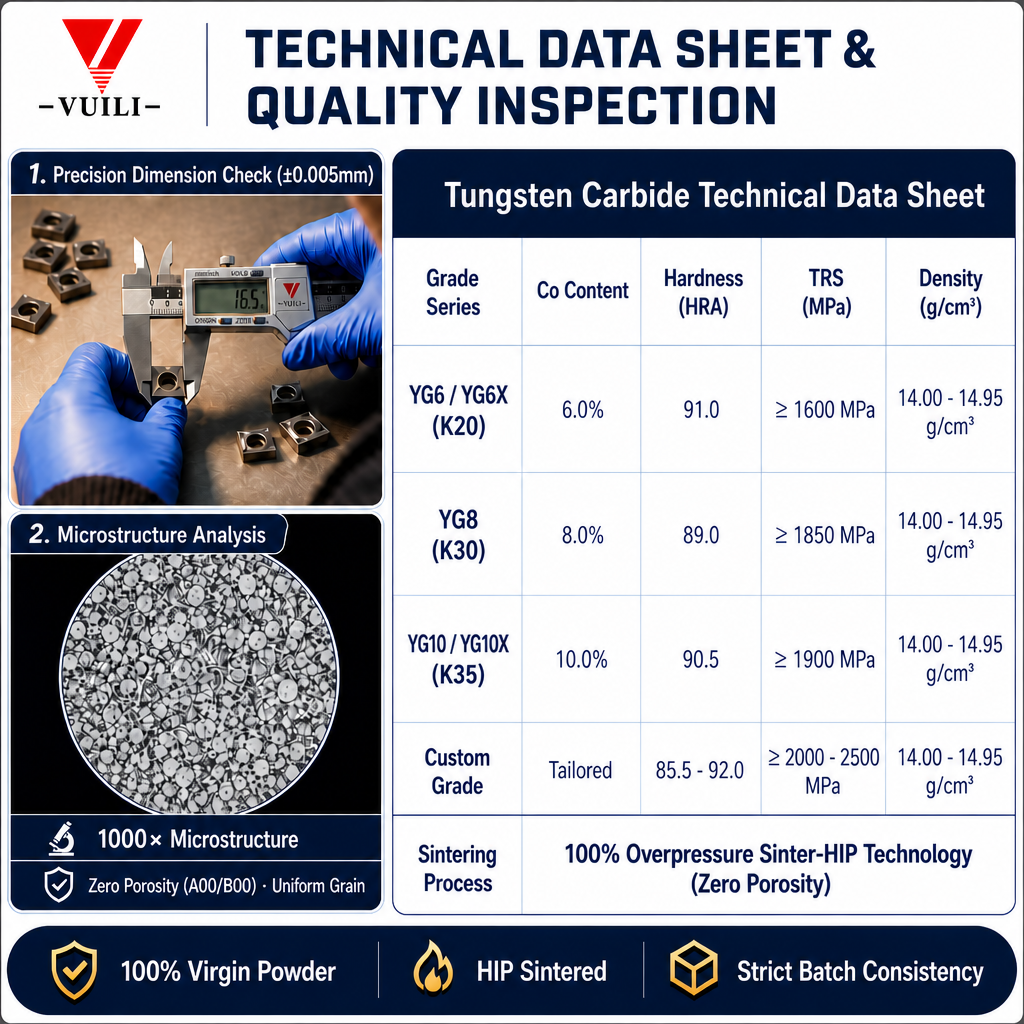
Optimized grade selection is not about picking the hardest carbide. It balances hardness, transverse rupture strength and wear resistance to fit your specific operating conditions. This matching logic directly reduces tool failure and extends service life.
2. Core Operating Conditions for Machining
We sort the most frequent machining conditions into five key categories. Each condition set requires different carbide property priorities.
- Continuous light cutting: stable load, low impact, high demand for abrasive wear resistance
- Intermittent cutting: repeated impact load, higher toughness requirement
- High-speed dry cutting: high thermal load, good thermal resistance needed
- Heavy rough machining: large cutting depth, strong impact, focus on bending strength
- Fine finishing: low feed, high surface finish requirement, stable edge retention
When you describe your operating conditions clearly, we can narrow down suitable grades quickly instead of testing blindly.
3. Carbide Grade Matching Reference Table
| Operating Condition | Recommended Grade Feature | Typical Application |
|---|---|---|
| Continuous finishing, low impact | High hardness, low cobalt content | Finishing inserts, solid carbide rods |
| Intermittent cutting, shock load | Higher cobalt, excellent toughness | Milling cutters, woodworking blades |
| Abrasive non-metal cutting | Fine grain, high wear resistance | Carbide strips, wear parts |
| Heavy rough cutting | Coarse grain, high rupture strength | Rough machining inserts |
All grades can be customized on grain size and binder content, to fit your exact operating limits.
4. Common Mistakes in Grade Matching
- Using ultra-hard fine-grain carbide for heavy intermittent cutting, leading to edge chipping;
- Choosing high-toughness high-cobalt carbide for finishing, causing fast flank wear and poor surface finish;
- Keeping the same grade after changing cutting speed or coolant settings;
- Confusing room-temperature static hardness with high-temperature performance under real cutting conditions.
These mistakes look like material quality problems, but most of them are grade mismatch against operating conditions.
5. How to Adjust Grades When Conditions Change
When your operating conditions shift, adjust carbide grades step by step rather than jump to totally different material.
- If chipping appears: increase binder content or switch to coarser grain grade;
- If wear is too fast: select finer grain or lower cobalt grade;
- If thermal deformation occurs: optimize grain structure for high temperature resistance;
- After grade adjustment, run small batch sample test under real operating conditions for validation.
6. Summary
Cemented carbide grades are optimized for different machining operating conditions. The best grade comes from matching material properties with your load, temperature, cutting mode and workpiece material. Clear condition information helps avoid blind trial and reduce tool cost. Send us your machining parameters and workpiece material for grade recommendation.
Related Products
Related Articles
Share your machining operating conditions, workpiece material and cutting parameters. We will recommend matched cemented carbide grades and support sample testing.
Contact Us For Grade Matching →This article serves as general grade guidance. Final grade selection should be confirmed by sample tests under your actual operating conditions.