Carbide Inserts for Turning, Milling & Cutting: Grade Selection by Workpiece Material
- Share
- publisher
- Jane
- Issue Time
- Sep 18,2026
Summary
This professional guide focuses on carbide insert grade selection for turning, milling and cutting operations. It matches dedicated carbide grades for steel, stainless steel, cast iron, aluminum and hardened steel, summarizes grade performance characteristics, lists practical application cases, and helps machinists and purchasers select the optimal carbide inserts by workpiece material.
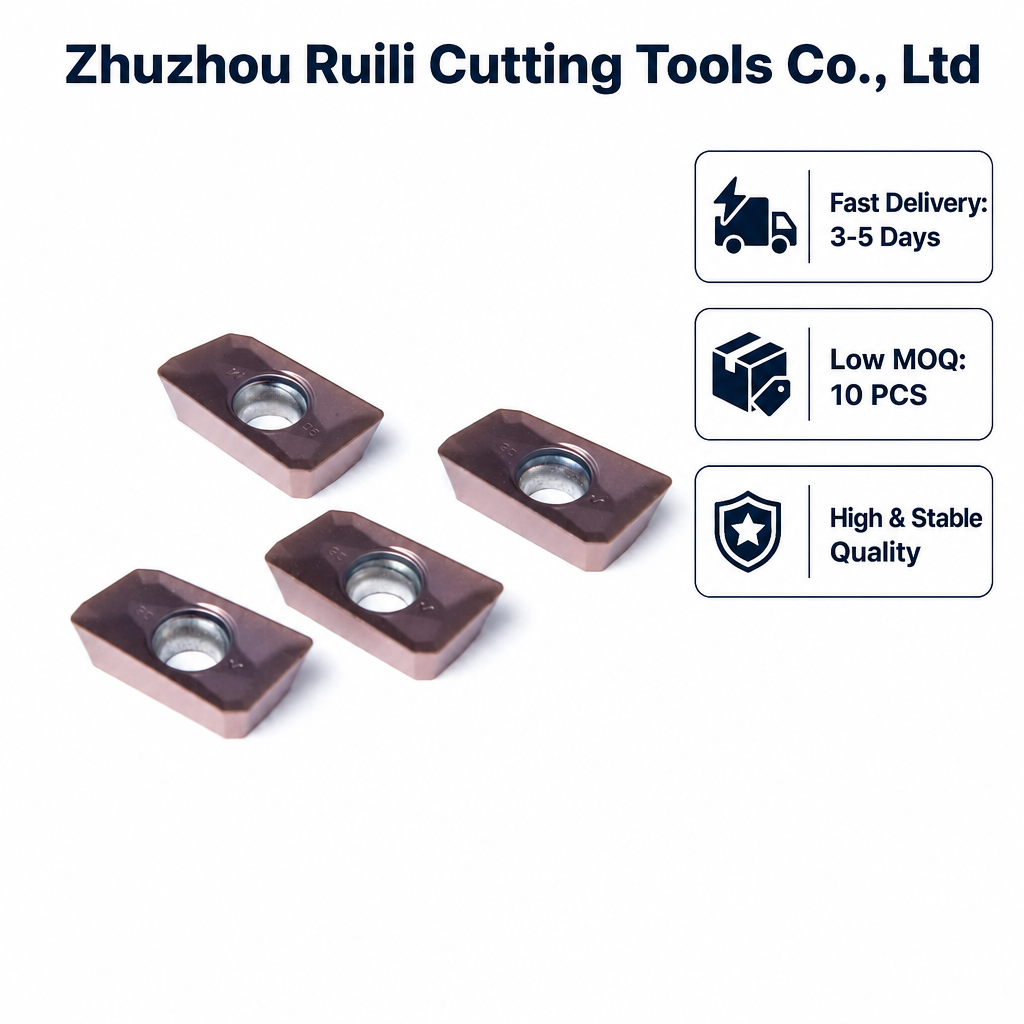
Full Article Structure
- 1. Introduction: Why Material-Matched Carbide Insert Grades Matter
- 2. Core Principles of Carbide Insert Grade Classification
- 3. Best Carbide Grades for Carbon Steel & Alloy Steel Turning/Milling
- 4. Grade Selection for Stainless Steel Machining
- 5. Suitable Grades for Cast Iron Cutting & Milling
- 6. Carbide Grades for Aluminum & Non-Ferrous Metal Machining
- 7. Grade Choice for Hardened Steel & High-Hardness Workpieces
- 8. Material-Based Grade Selection Full Reference Table
- 9. Common Grade Selection Mistakes in Turning & Milling
- 10. Final Summary & Custom Carbide Insert Support
1. Introduction: Why Material-Matched Carbide Insert Grades Matter
Carbide inserts are the most widely used consumable tools for CNC turning, milling and general metal cutting. Many machining factories only focus on insert shape and coating type while ignoring substrate grade matching. Using the wrong carbide grade for specific workpiece materials will lead to rapid flank wear, edge chipping, built-up edge (BUE) and unstable machining accuracy, greatly shortening tool service life and increasing production costs.
Different carbide insert grades feature different cobalt content and WC grain size, forming unique balances of hardness, wear resistance and toughness. Steel, stainless steel, cast iron, aluminum and hardened steel have completely different cutting characteristics, including cutting temperature, chip viscosity and impact load. Only matched carbide substrate grades can achieve stable cutting performance and maximum tool life.
This article systematically explains carbide insert grade selection rules based on common workpiece materials. It covers turning and milling scenarios, summarizes applicable grade characteristics, analyzes failure causes of mismatched grades, and provides a full set of practical selection guidelines for machinists, tool purchasers and processing workshop managers.
2. Core Principles of Carbide Insert Grade Classification
All conventional WC-Co carbide insert grades are defined by two core parameters: cobalt binder proportion and tungsten carbide grain size. These two parameters determine the core cutting performance of the insert substrate.
- Low cobalt & fine grain: High hardness and excellent wear resistance, suitable for stable finishing cutting with low impact load. Easy to chip under interrupted cutting or heavy vibration.
- Medium cobalt & medium grain: Balanced hardness and toughness, universal grade for semi-finishing and general-purpose machining, tolerating minor cutting impact.
- High cobalt & coarse grain: Outstanding toughness and impact resistance, anti-chipping performance for rough milling and interrupted cutting, with relatively lower wear resistance.
Coating improves surface high-temperature resistance and lubricity, but it cannot compensate for substrate grade defects. If the base carbide grade does not match the workpiece material, even premium coating cannot avoid tool premature failure.
3. Best Carbide Grades for Carbon Steel & Alloy Steel Turning/Milling
Carbon steel and common alloy steel are the most widely processed metal materials, featuring moderate hardness, stable cutting chips and continuous cutting load. Both turning and milling processes require balanced wear resistance and certain impact resistance.
For steel finishing turning and precision milling, fine-grain low-cobalt grades are preferred. These grades maintain high hardness, resist abrasive wear, and keep long-term edge sharpness, ensuring stable workpiece surface roughness and dimensional accuracy during continuous cutting.
For steel rough turning and rough milling with large cutting depth and intermittent cutting, medium-grain balanced grades are the best choice. The moderate cobalt content improves toughness, effectively avoiding edge chipping caused by heavy cutting load and spindle vibration, while retaining qualified wear resistance for mass production.
Steel machining scenarios prohibit the use of ultra-high-toughness coarse-grain grades for finishing, as excessive cobalt content will cause rapid tool wear and poor surface finish.
4. Grade Selection for Stainless Steel Machining
Stainless steel (304, 316, 201) has high toughness, strong chip adhesion and high cutting temperature. Built-up edge is the most common tool failure in stainless steel processing. Ordinary steel-dedicated grades are prone to sticky tools, edge peeling and accelerated wear.
Stainless steel turning and milling require fine and uniform grain carbide grades with moderate cobalt content. This type of grade has good thermal stability and edge firmness, effectively resisting thermal wear and adhesive wear. Uniform internal structure avoids local material collapse caused by high-temperature alternating load.
It is not recommended to use high-hardness ultra-fine grain low-cobalt grades for stainless steel roughing. Excessive brittleness will lead to micro-chipping under high-temperature cutting impact, resulting in continuous tool failure and poor workpiece surface quality.
5. Suitable Grades for Cast Iron Cutting & Milling
Cast iron includes gray cast iron and ductile cast iron, featuring hard particle impurities and discontinuous chip breaking. The cutting process produces frequent tiny impact and abrasive wear, making abrasive wear the main tool failure mode.
Cast iron machining prioritizes wear resistance. Low-cobalt fine-grain carbide grades are the mainstream choice for cast iron turning and milling. High substrate hardness effectively resists abrasive wear from cast iron hard particles, greatly extending tool service life in continuous mass production.
For ductile cast iron with higher toughness and more obvious cutting impact, medium balanced grades can be selected to appropriately improve anti-chipping ability, preventing edge breakage during intermittent milling of cast iron parts.
6. Carbide Grades for Aluminum & Non-Ferrous Metal Machining
Aluminum alloy, copper alloy and other non-ferrous metals have low hardness but strong ductility and extreme chip adhesion. Tool sticky edge is the biggest problem in non-ferrous metal cutting. High surface finish requirements also put forward high demands on substrate edge stability.
Aluminum machining dedicated carbide grades adopt ultra-fine grain structure with uniform organization. The dense and smooth substrate surface reduces chip adhesion, ensuring clean chip removal. The fine grain feature allows ultra-sharp edge grinding without micro-cracks, perfectly adapting to high-speed finishing of aluminum parts.
High-cobalt coarse-grain grades are not suitable for aluminum finishing. Loose internal structure and poor edge stability will cause burrs on workpiece surfaces and unstable cutting quality.
7. Grade Choice for Hardened Steel & High-Hardness Workpieces
Hardened steel, die steel and high-hardness alloy workpieces usually have hardness above HRC45, featuring high cutting resistance and strong abrasive wear. Tool brittleness failure and rapid wear are the main challenges.
High-hardness cutting must adopt ultra-fine grain low-cobalt high-hardness carbide grades. Extremely high substrate HRA hardness resists strong abrasive wear, and uniform ultra-fine grain structure maintains edge integrity under high-load cutting. It avoids rapid passivation of cutting edges and meets the requirements of hard material finishing and semi-finishing.
Due to the high brittleness of low-cobalt grades, hardened steel machining requires stable machine tool rigidity and reasonable cutting parameters to avoid violent vibration leading to tool fracture.
8. Material-Based Grade Selection Full Reference Table
This table summarizes the optimal carbide insert grades and performance focus for all common workpiece materials and cutting processes.
| Workpiece Material | Cutting Process | Recommended Carbide Grade Type | Core Performance Focus |
|---|---|---|---|
| Carbon Steel / Alloy Steel | Finishing Turning & Milling | Fine-grain low-cobalt grade | High wear resistance, stable edge sharpness |
| Rough Turning & Milling | Medium-grain balanced grade | Balance wear resistance and anti-chipping toughness | |
| Stainless Steel | General Turning & Milling | Fine uniform grain medium-cobalt grade | Anti-adhesion, high thermal stability |
| Cast Iron | Finishing Cutting | Ultra-fine grain low-cobalt grade | Strong abrasive wear resistance |
| Rough Milling | Medium balanced grade | Prevent impact chipping | |
| Aluminum / Copper Alloy | High-speed Finishing & Milling | Ultra-fine grain dedicated grade | Smooth surface, anti-burr, anti-sticky edge |
| Hardened Steel / Die Steel | Hard Material Finishing | Ultra-fine grain high-hardness grade | Ultra-high hardness, resist hard wear |
9. Common Grade Selection Mistakes in Turning & Milling
Most tool premature failures are caused by incorrect grade matching rather than coating or parameter problems. The following four misunderstandings are the most common in machining workshops.
First mistake: Universal grade for all materials. Many factories use one single carbide grade for steel, stainless steel and cast iron. Mismatched substrate leads to either severe wear or frequent chipping, greatly increasing tool consumption cost.
Second mistake: Blindly pursuing high hardness for all scenarios. High-hardness low-cobalt grades are brittle and cannot withstand interrupted rough milling and stainless steel high-temperature impact, causing mass tool breakage.
Third mistake: Over-reliance on coating performance. Coating only improves surface performance. If the substrate grade does not match the workpiece material, no coating can fix the problem of poor substrate toughness or insufficient wear resistance.
Fourth mistake: Ignoring grain size difference. Grades with the same cobalt content but different grain sizes have huge differences in cutting stability, especially critical for precision finishing and hard material machining.
10. Final Summary & Custom Carbide Insert Support
Carbide insert grade selection must be based on workpiece material and cutting process. Carbon steel suits balanced and fine-grain grades; stainless steel requires thermally stable uniform grain grades; cast iron prioritizes wear-resistant low-cobalt grades; aluminum needs ultra-fine grain anti-adhesion grades; hardened steel must use high-hardness ultra-fine grain substrates.
Reasonable grade matching can maximize tool service life, stabilize machining quality and reduce comprehensive production costs. Avoid universal grade abuse and blind pursuit of single performance index. Combine material characteristics, cutting load and process type to select the most suitable carbide insert substrate.
We supply full-series standard carbide turning inserts and milling inserts with complete grades for all metal materials. Custom grades and special-shaped inserts are available for special machining scenarios.
Our Carbide Insert Products
Standard Turning & Milling Carbide Inserts
Full-grade carbide inserts dedicated for steel, stainless steel, cast iron, aluminum and hardened steel. Strict substrate quality control, stable batch performance, suitable for mass CNC machining production.
Custom Special Carbide Inserts
Support custom carbide insert grades, special shapes and non-standard sizes for personalized machining requirements, meeting special process and workpiece material processing needs.
CTA Contact Zone
Technical Consultation & Grade Recommendation
📧 Contact Us → /contact-us.htm
Tell us your workpiece material, cutting process and machine parameters. Get free professional carbide insert grade selection advice and customized quotation.
Bulk Procurement & Long-Term Cooperation
📧 Contact Us → /contact-us.htm
Wholesale price support for bulk insert orders, stable inventory supply and batch quality assurance for machining factories and distributors.
Disclaimer
The grade selection suggestions in this article are for general industrial reference. Actual cutting effect is affected by machine rigidity, cutting parameters, coating type and workpiece hardness fluctuation. Please consult our technical team for targeted grade matching before large-scale procurement and mass production.