Built-up Edge on Carbide Tools: How to Prevent It in Machining
- Share
- publisher
- Bree
- Issue Time
- Nov 24,2026
Summary
Built-up edge (BUE) is sticky workpiece material welded on the rake face, ruining surface finish and causing edge chipping. This article explains BUE formation mechanism and shares a free-cutting steel turning case with proven anti-BUE solutions including coating, chipbreaker and parameter tuning.
Full Article Structure
1. What is Built-up Edge (BUE)
Built-up edge is a layer of cold-welded workpiece material stuck firmly on the rake face near cutting edge. It changes the actual cutting angle randomly. BUE often appears in low-to-medium speed machining of soft, ductile metals including free-cutting steel, low carbon steel and stainless steel.
2. How BUE Forms & Its Harm in Turning
High friction between chip and rake face causes local welding. BUE grows gradually then breaks off irregularly. When it falls away, it may tear small carbide particles off the edge. Consequences: unstable surface roughness, inconsistent diameter size, random scrap and shortened insert life.
3. Practical Case: BUE on Free-cutting Steel Turning
A fastener factory machined 12L14 free-cutting steel bolts. They had heavy BUE, frequent surface scratches and size drift. Our solution package:
- Switch to smooth PVD coated inserts with low friction surface
- Use sharp positive chipbreaker for smoother chip flow
- Raise cutting speed out of BUE-prone speed zone
- Improve coolant concentration and delivery to rake face
- Result: BUE almost eliminated; surface finish stable, insert life +35%
4. Main Methods to Prevent Built-up Edge
- Adjust cutting speed: avoid the low-speed BUE zone
- Select low-friction PVD coating like TiAlN or TiCN
- Use positive rake angle chipbreaker to reduce chip friction
- Add suitable lubricant coolant instead of plain water
- Keep cutting edge clean and avoid too heavy hone for ductile material
5. Suitable Insert Grades & Chipbreakers for BUE-prone Materials
For low carbon steel and free-cutting steel, smooth coating + light cutting-edge hone works best. Avoid thick CVD coating for sticky soft materials. Chipbreaker geometry should promote curled chip and fast chip evacuation.
6. Summary
Built-up edge is a common trouble for ductile steel turning. It cannot be solved only by changing one parameter. Coating, chipbreaker, cutting speed and coolant must work together. Contact us if you keep facing BUE on carbon steel, free-cutting steel or stainless steel turning.
Tell us your workpiece material, turning speed range and surface roughness requirement, we recommend anti-BUE carbide inserts and chipbreaker style.
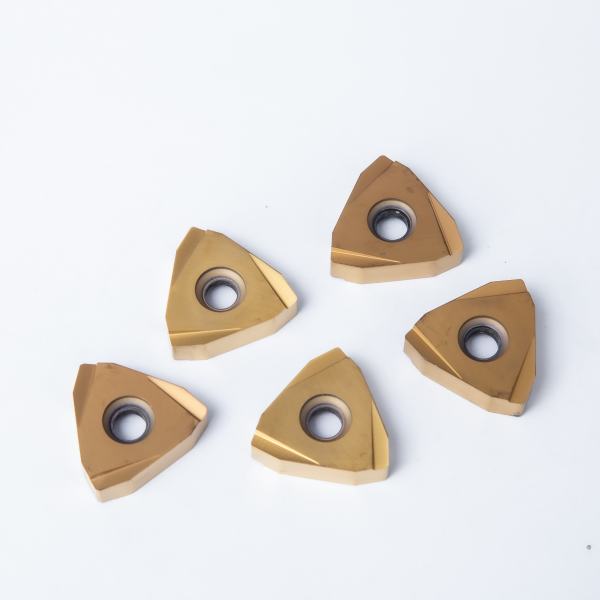
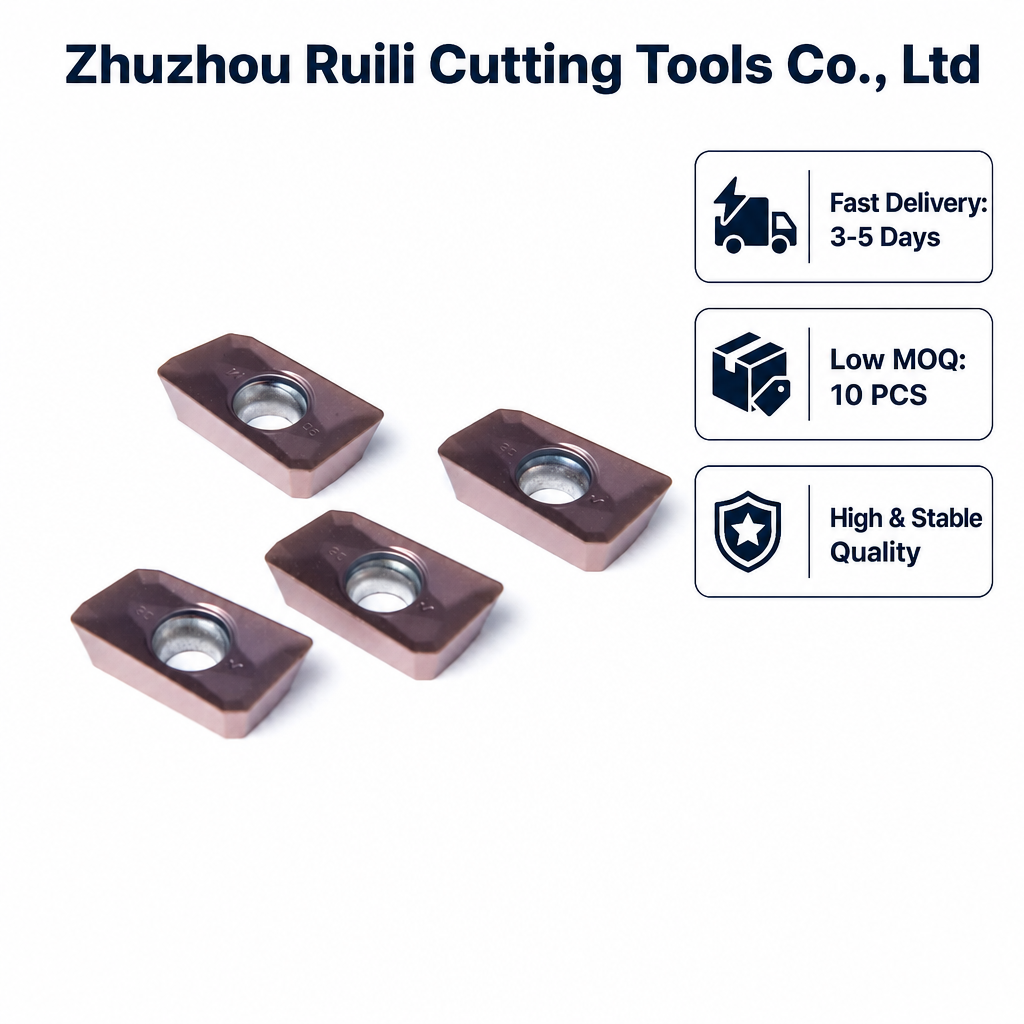
Low friction coated carbide inserts for free-cutting steel, low carbon steel and stainless steel anti-BUE turning.